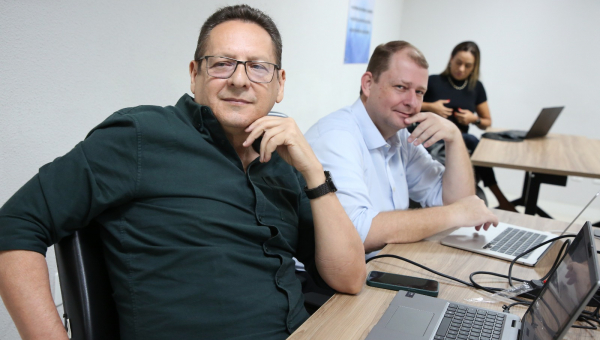
The Superior School of the Judges of the State of Tocantins (Esmat) concluded, on Wednesday (Nov 26th), the course on "Analysis of Legal Data in the TJTO: Foundations of Jurimetry and AI", held in two complementary stages: the EaD phase, already closed, and the in person phase, which officially ends the training.
The distance stage took place on November 4th and 11th, with web classes taught by teachers José de Jesus Filho and Alexandre Nicolella. In this first moment, the participants were introduced to the fundamentals of jurimetry, to the design of research applied to the legal context, to the structuring of hypotheses and to the initial use of tools for data analysis.
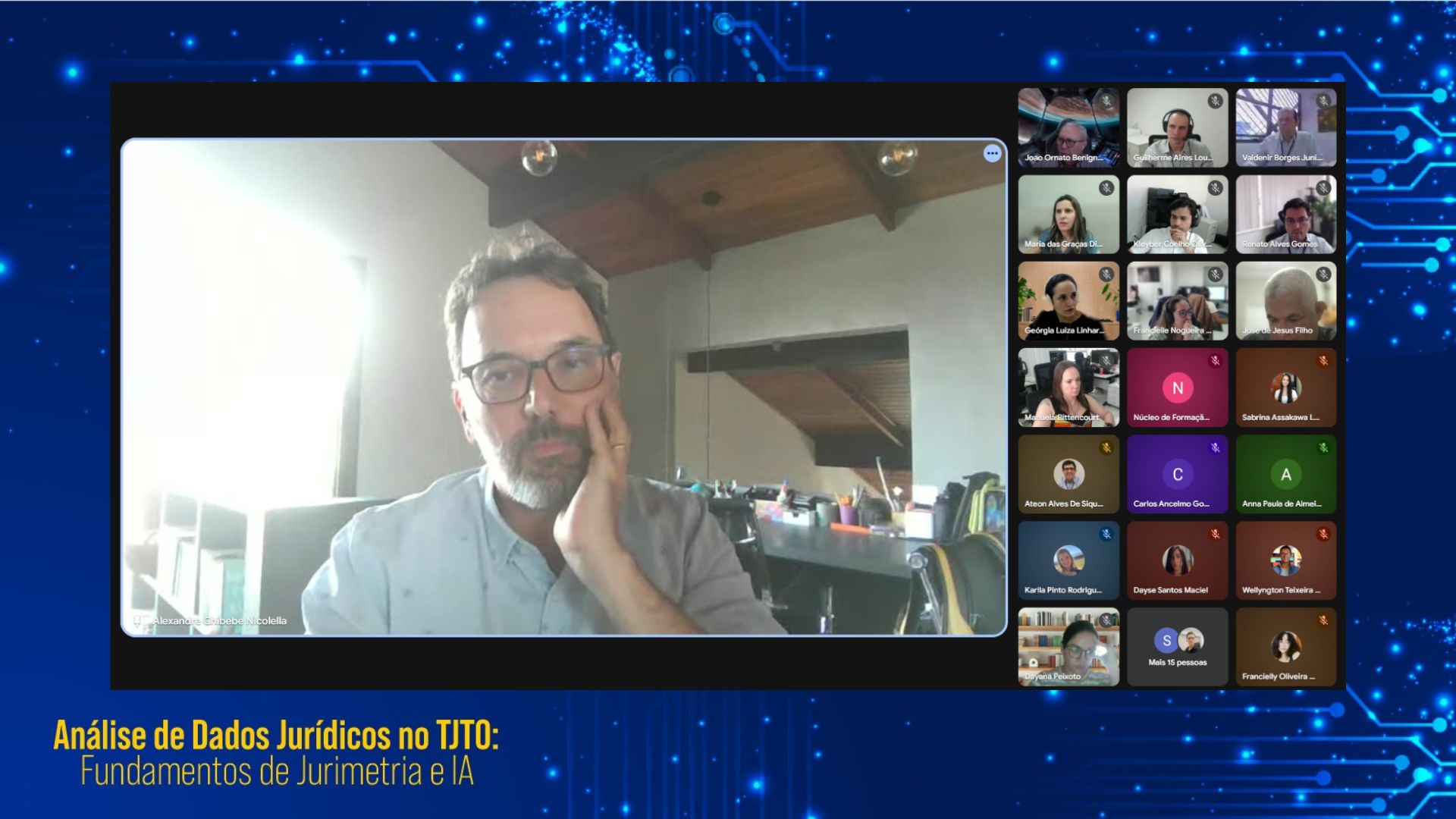
Subsequently, the face-to-face stage brought together the server(s) for the theoretical understanding of data structuring and visualization, as well as the development of practical projects involving collection and processing of judicial data, exploratory analysis and presentation of results.
For Dayana Peixoto Rocha, legal advisor, the course was enriching. "With each class, I see more possibilities to use data in a strategic way in my work, whether to understand patterns of judicialization or to improve internal flows. Undoubtedly, the course broadens the view on the potential of data analysis in the Judiciary and reinforces the importance of integrating technology to legal knowledge in the day by day of the Court where I work and throughout the Court", she said.
Additionally, Adriana Reis, head of the Division of Monitoring of Goals and Indicators (DIVMON/CPLAN/CGJUS), highlighted that the activities were a great learning experience.
“The course has been challenging, especially for involving programming language, as well as representing a unique learning opportunity. Adequate data structuring and jurimetric analysis are fundamental to produce accurate diagnoses and support decisions in the Judiciary. These two elements go together and strengthen the way we interpret information, identify patterns and turn data into concrete results for management," she said.
The action was aimed at employees of the units of the Coordination of Strategic Management (Coges), Division of Monitoring of Goals and Indicators (Divmon), Center for Management of Precedents and Collective Actions (Nugepac), Judicial Research Group (GPJ) and Center for Parameterization (Nupara), with the aim of strengthening the culture of innovation and evidence-based decision-making in the Judiciary of the state of Tocantins.
_thumbnail_thumbnail.jpeg)
_thumbnail_thumbnail.jpeg)
_thumbnail_thumbnail.jpeg)
_thumbnail_thumbnail.jpeg)
_thumbnail_thumbnail.jpeg)

_thumbnail.jpeg)
_thumbnail.jpeg)
_thumbnail.jpeg)
_thumbnail.jpeg)
_thumbnail.jpeg)