


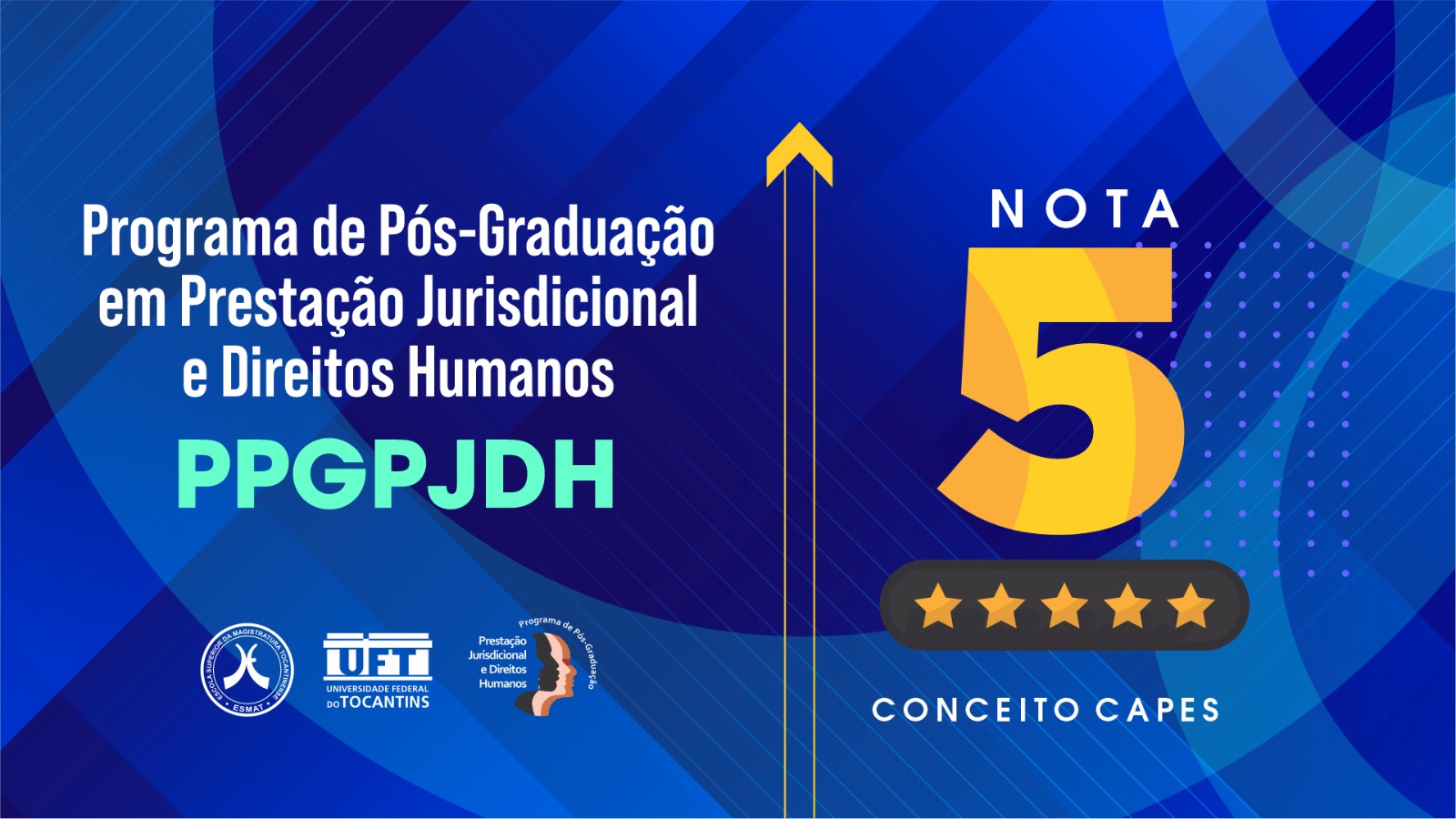
The week began with one of the news that we like to share: The STRICTO SENSU Post-Graduation Association Program in Judicial Provision and Human Rights (PPGPJDH), conducted by the Federal University of the state of Tocantins (UFT) in partnership with the Court of Justice of the State of Tocantins (TJTO), through the Superior School of the Judges of the State of Tocantins (Esmat), achieved a score of 5 in the Quadrennial Evaluation of Capes.
In practice, this result places the program at a level of excellence, with recognition not only for academic consistency, but also for the impact of research and products aimed at improving judicial provision and promoting human rights.
For Justice Marco Villas Boas, general director of Esmat and president of Copedem, who has been at the head of this project since the first negotiations to create the program, the note consolidates a path built with long-term vision, institutional articulation and investment in training.
“This result is the result of the effort of professors, students and graduates. Each article, each technical production and each approved project were a step towards this note, which puts the program in a position of excellence in our country", he commented.
Still according to him, the approach with UFT and the expansion of partnerships gave support to a model that sought from the beginning to bring together academia and Justice System.
Praise in the opinion: esmat as basis
Among the points that attracted the most attention in the opinion of Capes, a detail appears strongly: the structure of Esmat. The document notes that the fact that the program is carried out entirely in the facilities of the School, with classrooms, operational support secretariat and library in the same space, facilitates academic integration and day-to-day management.
The text goes further and describes the infrastructure as "very robust", citing elements such as auditorium with capacity for almost 200 people, study stations and booths, room for group study and even recording studio with editing island, resources considered uncommon in programs of the area and that expand the use of face-to-face and digital methodologies, as well as supporting content production and registration of activities.
The evaluation also associates this organization and these resources with the ability of the program to adapt at critical moments, such as the pandemic period, when Esmat managed to reorganize itself to maintain activities at a distance and ensure the continuity of the academic calendar.
Another valued aspect is the network of institutional partnerships built over time. The opinion points adherence of the program to social and institutional demands, with articulation to organs of the Justice System and other institutions. It highlights that the themes of the projects dialogue with concrete challenges of contemporary society, such as access to Justice, social inclusion, violence, penal system, human rights and education, showing effective contribution to society and strategic sectors.
History
The coordinator of the program, Doctor Professor Tarsis Barreto, highlighted that the note recognizes the work of excellence built by UFT and Esmat over more than a decade and it expands the possibilities for expansion of the actions of the program, with gains for the Justice System of the state of Tocantins and the academic community.
"The achievement of grade 5 in the quadrennial evaluation of Capes represents the crowning of the work of excellence developed by UFT and Esmat, in a partnership that extends for more than a decade, whose fruits are perceived by the entire academic and professional community."
According to the coordinator, the performance also broadens perspectives for the advancement of the Program in the coming years, especially in the areas of teaching, research, and outreach. “The maximum score in the CAPES evaluation consolidates the Program as a benchmark throughout the country, opening new horizons for the expansion of teaching, research, and outreach activities, with significant gains for the Justice System of the state of Tocantins and for the Brazilian academic community, also revealing the high quality of the Program's faculty and students.”
The history of the program reinforces this proposal. Construction began in 2011, and the program started activities in 2013, with progressive strengthening of the faculty, expansion of scientific production, consolidation of groups and research projects and extension actions, as well as perceived results in projects, training and improvement of routines and practices in partner institutions of the Justice System.
Internationalization
In addition to the results in teaching and research, the program has also been expanding internationalization actions, a point that gained weight in the evaluation criteria of CAPES. According to the coordinator, Professor Tarsis Barreto, participation in international congresses and seminars, the construction of new partnerships and exchange with research centers abroad have contributed to increase the visibility of the program and incorporate innovative practices.
“The crucial point for this progress is the increase in the internationalization of the Program, a fundamental requirement for exchange with new knowledge centers abroad, the conclusion of new partnerships and the adoption of innovative practices for the expansion of science," he added.
This movement includes initiatives that are already part of the ESMAT calendar, such as the International Congress on Human Rights, which brings together national and foreign guests and the ESMAT Journal, linked to the program.
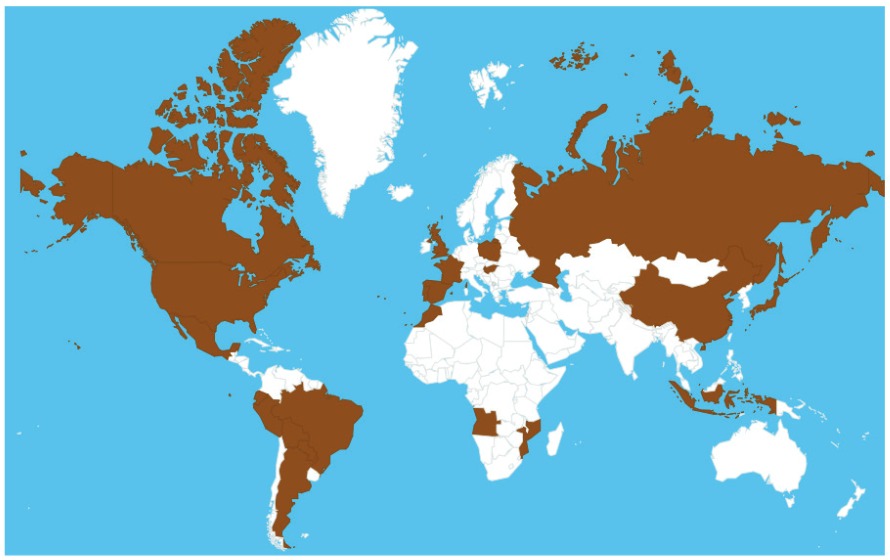
The journal, evaluated with Qualis B1, and currently in its 33rd edition, has expanded its international presence and it already includes articles by international authors from 24 countries, including Angola, Argentina, Bolivia, Cape Verde, Canada, China, Ecuador, Spain, United States, France, Hungary, Indonesia, England, Japan, Morocco, Mexico, Mozambique, Wales, Paraguay, Peru, Poland, Portugal and Russia, in addition to Brazil.
The international reach of the Journal can be seen on the map below:
Next classes
For those who were already looking at the next opportunities, the program opens on Thursday (January 15th), the registration process for entry in the first semester of 2026, with vacancies for Class 14 of the Master’s Degree (2026-2027) and Class 2 of the Doctorate (2026-2029), including vacancy distribution among partner institutions and affirmative action reserve.
The notices and more information can be consulted clicking here.
Understanding the CAPES Quadrennial Evaluation
The Quadrennial Evaluation is part of the process for ensuring the continuity of Stricto Sensu Graduate Programs and aims to contribute to guaranteeing the quality of Brazilian graduate education. The results are expressed as scores from 1 to 7, assigned to master's and doctoral courses based on the analysis of indicators from the evaluated period (2021–2024).
According to CAPES (Coordination for the Improvement of Higher Education Personnel), the evaluation is initially carried out by the area committees, and then proceeds to the Higher Education Technical-Scientific Council (CTC-ES), the body responsible for approving the final result.
As the data released on January 12th corresponds to a partial result, the classification is still subject to the stage of requests for reconsideration (until February 11th) and a new deliberation. The final result is expected to be published by May 29th, according to the official schedule.
