


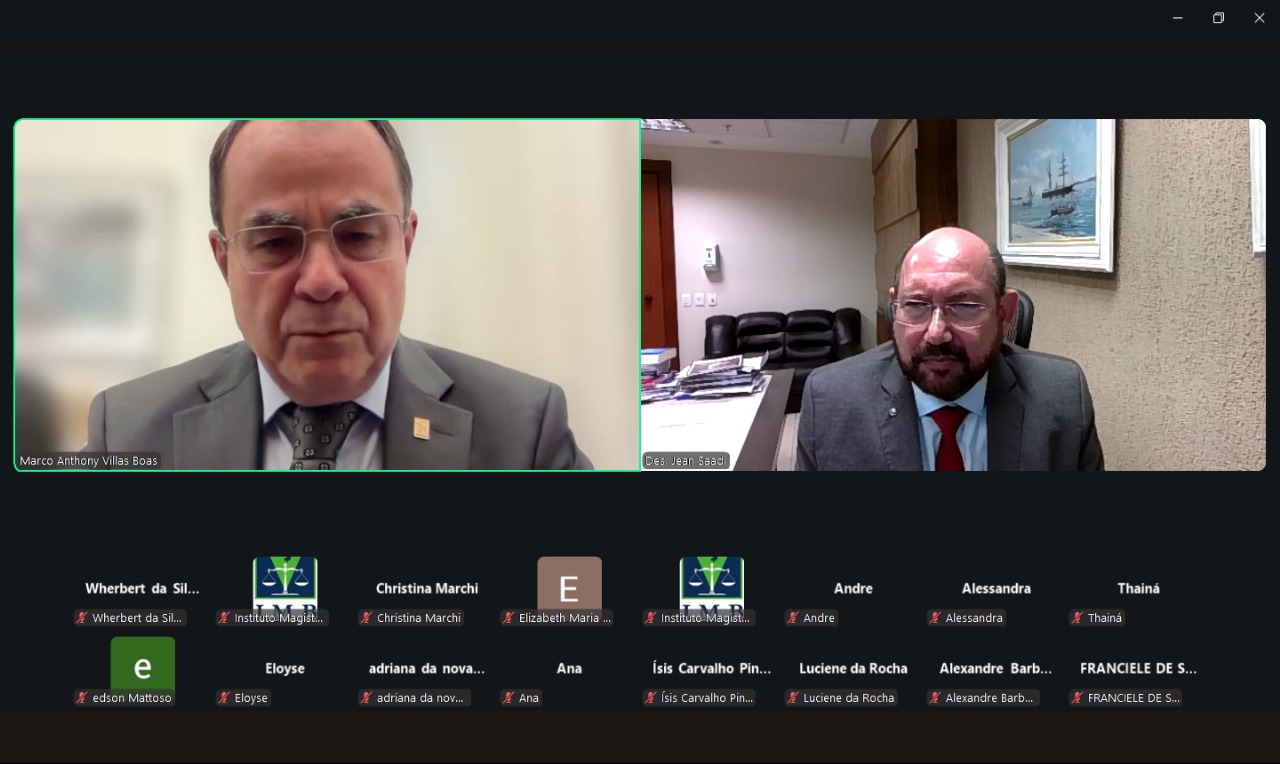
With the proposal to reflect on how changes in debate in the Civil Code can directly affect life and autonomy of indigenous peoples in Brazil, the general director of ESMAT and president of Copedem, Justice Marco Villas Boas, participated this Tuesday (November 18th) as a speaker of the Webinar on "Reform of the C. C. and the Rights of Indigenous Peoples: from civil capacity to collective legal personality", promoted by the Institute of Magistrates of Brazil (IMB), within the project on "IMB Connections".
The virtual meeting was conducted by Justice Jean Saadi, who opened the dialogue with magistrates, Law operators and students from various regions of the country on the impacts of the reform of the Civil Code in guaranteeing the rights of indigenous peoples.
In his presentation, Villas Boas defended the centrality of indigenous self-determination, stressing that it is up to the peoples themselves to define their mechanisms of representation and action on the legal plan, without external impositions.
“When we discuss civil capacity and collective legal personality, we are not dealing with a technical detail, but how the Law itself sees these peoples: whether as full subjects of rights or as recipients of guardianship and forced integration", he said.
In his speech, the justice also stressed that integration into the Western society cannot be treated as an obligation, but as a political and cultural choice of each people, excluding any assimilationist perspective.
When dealing with indigenous peoples in voluntary isolation, emphasized the role of the National Foundation of Indigenous Peoples (FUNAI) and the Federal Public Prosecution (MPF) in protecting the right to live without being harassed, ensuring that their will is respected, and their way of life is not violated by economic or territorial pressures.
