


The appreciation of narratives that make up social plurality and the tackling historical silence marked the opening of the II Week of Dialogues on Equality and Diversity, held on Monday (November 17th), in the auditorium of the Court of Justice of the State of Tocantins (TJTO). The event, promoted by the General Internal Affairs of Justice (CGJUS), through the Superior School of the Judges of the State of Tocantins (Esmat) and in partnership with the Court of Justice of the State of Tocantins (TJTO), brings together different perspectives and experiences, integrating institutional efforts for racial and gender equity, sexual diversity, the rights of traditional communities and accessibility.
The initiative is aligned with the guidelines of the National Council of Justice (CNJ) and the commitment to improve the judgment of cases involving historically vulnerable groups.
During the opening, the president of the Court of Justice, Justice Maysa Vendramini Rosal, highlighted the commitment of the institution to the promotion of rights and the importance of maintaining permanent spaces for dialogue.
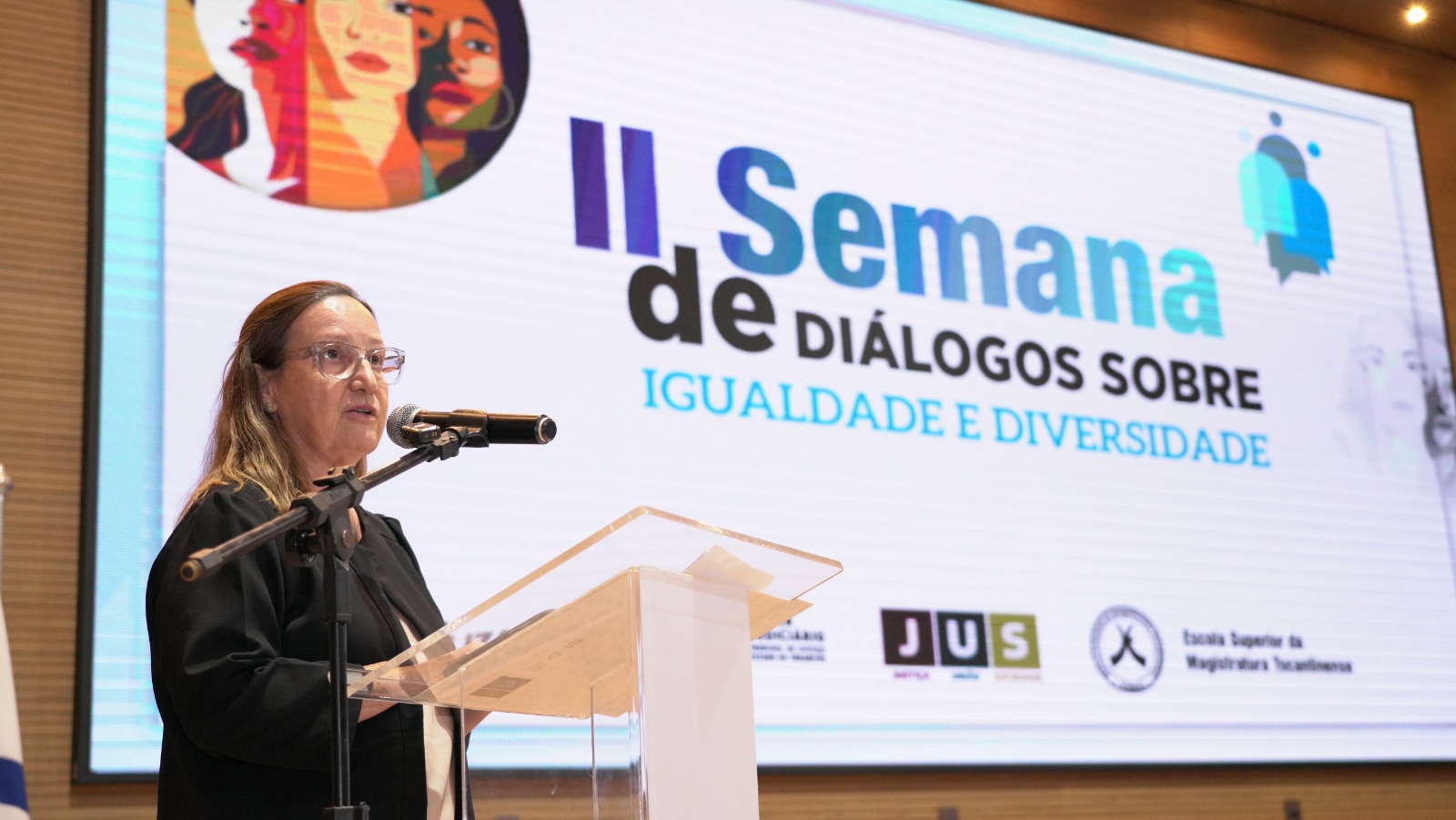
“Debating and reflecting on the challenges we still face in the search for a fairer, more egalitarian and unprejudiced world is fundamental. In this sense, this week is a very important initiative. It is a necessary moment for us to dialogue and advance in the guarantee of fundamental rights, regardless of race, sex or gender. This is a commitment of the Judiciary, and I am happy to see that the Week arrives at its second edition with so many people concerned and committed to the same purpose", she said.
Justice Ângela Issa Haonat, creator of the show on Silenced Voices - Struggle of Paula for Freedom -, a play presented in the opening ceremony, reinforced that the initiative consolidates policies aimed at inclusion and tackling inequalities.
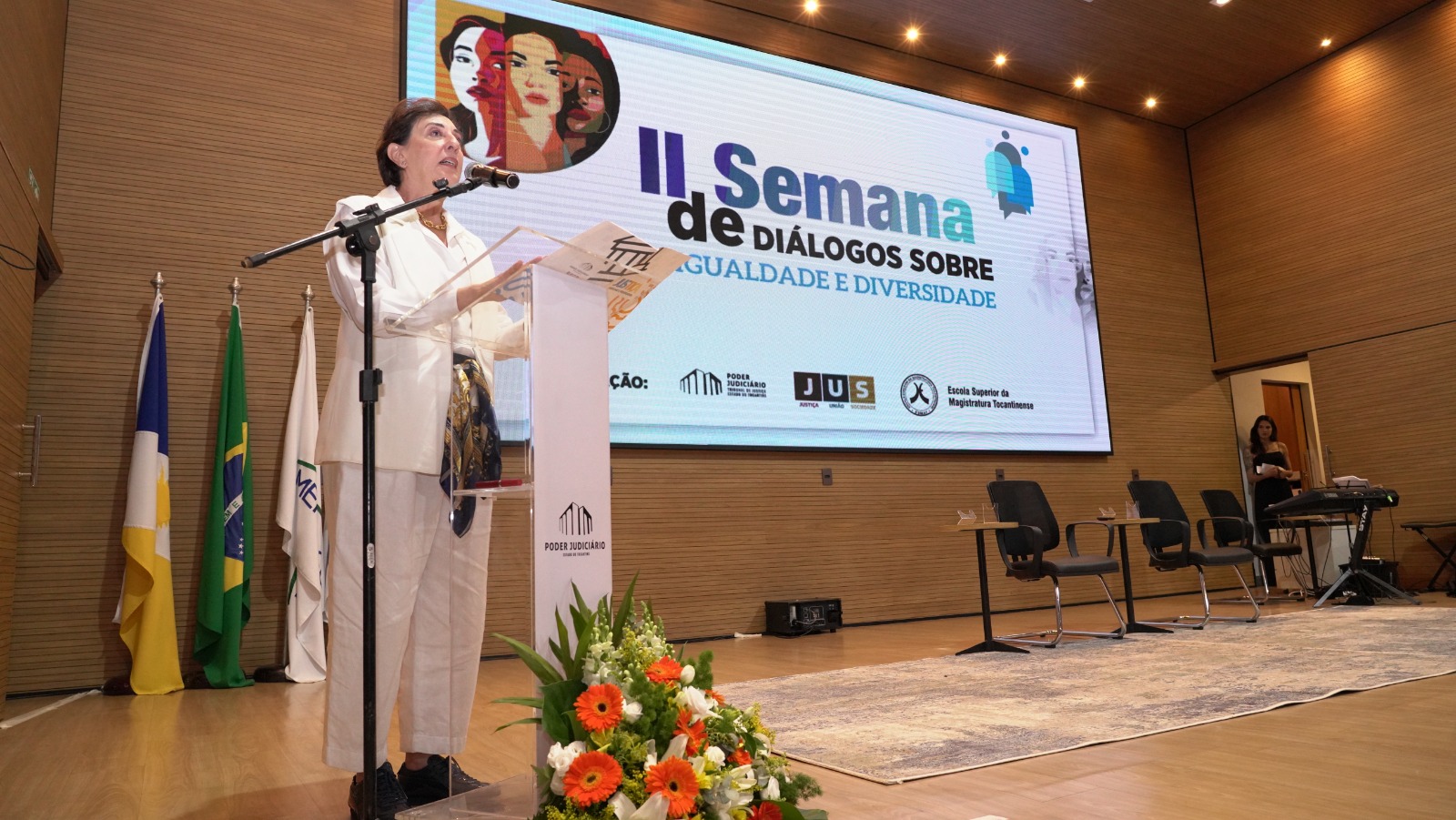
“It is a pleasure to participate in the opening of the II Week of Dialogues on Equality and Diversity, an initiative that reaffirms the commitment of the Judiciary of the state of Tocantins with the promotion of inclusion, respect and equity. This week is not only an event in our institutional agenda, it represents the consolidation of permanent policies aimed at addressing inequalities and strengthening diversity as a public value", she said.
When reflecting on the importance of institutional memory, Justice Ângela Prudente, president of the Commission for Memory Management of the Judiciary of the state of Tocantins, highlighted the role of the historical rescue for a more conscious justice.
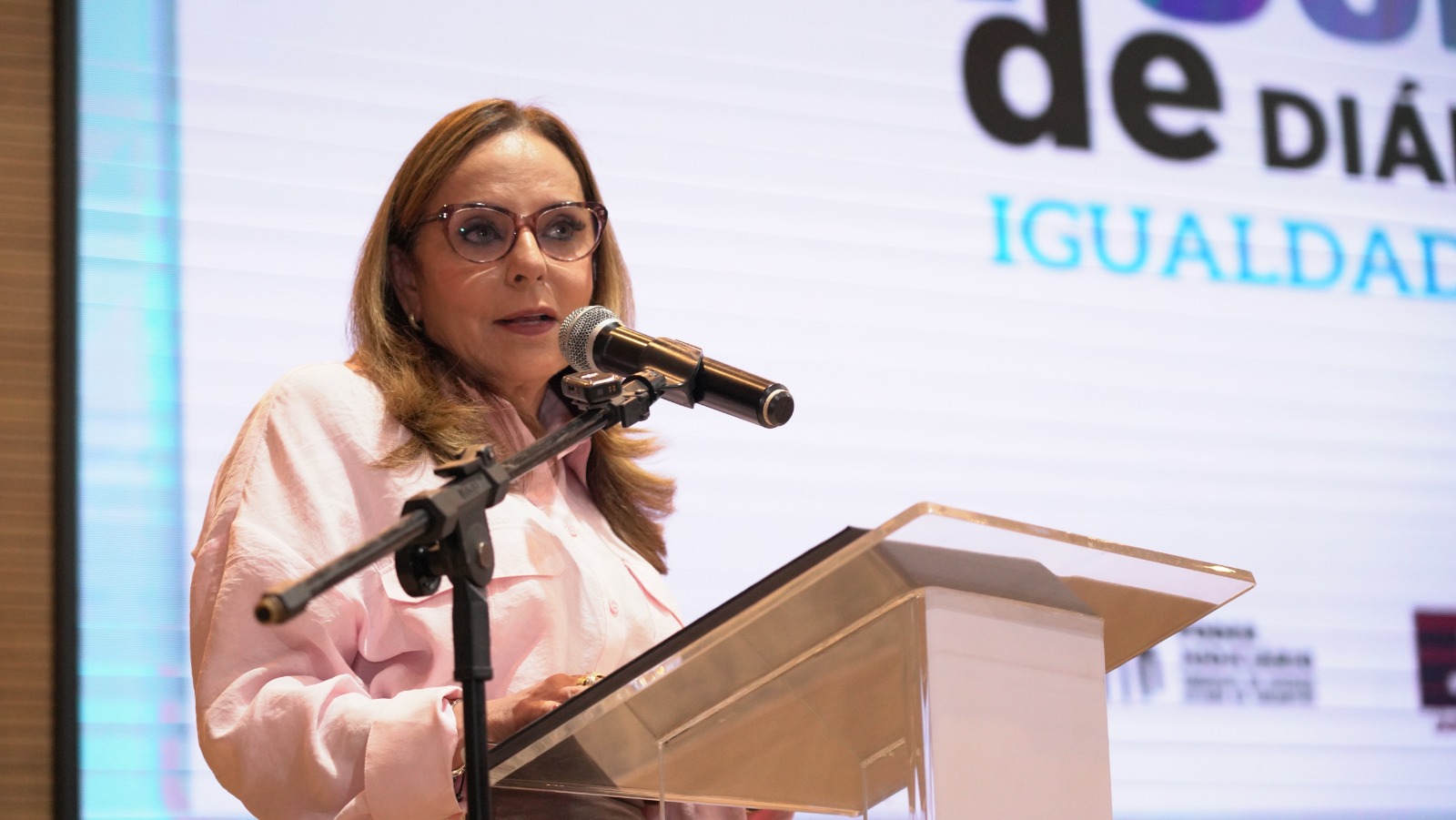
“The opening of the Silenced Voices show brings us together in this unique moment around the human commitment to recognize the trajectories of struggle that preceded us and shape the identity of what we are. Remembering it is a public duty, and the redemption of our history is an essential foundation for building a more conscious justice. The National Policy, established by the National Council of Justice, guides and inspires us to look at the past with sensitivity, ethics and humanity".
“It was a profoundly necessary moment. The event not only opened space to discuss equality and diversity, but also did so from perspectives that really dialogue with the reality of people. Hearing such honest talk about memory, silencing and resistance reminds us that this debate is not theoretical, it’s human", said Journalist Vithor Rodrigues, who accompanied the programming.
Magna lecture
The magna lecture was conducted by Judge Renata do Nascimento e Silva and mediated by the chief of staff of the General Internal Affairs, Bruna Patrícia Ferreira Pinto, and the civil server Eva Portugal. During the presentation, the importance of recognizing the historical erasure of the black population and its relationship with current inequalities was highlighted.
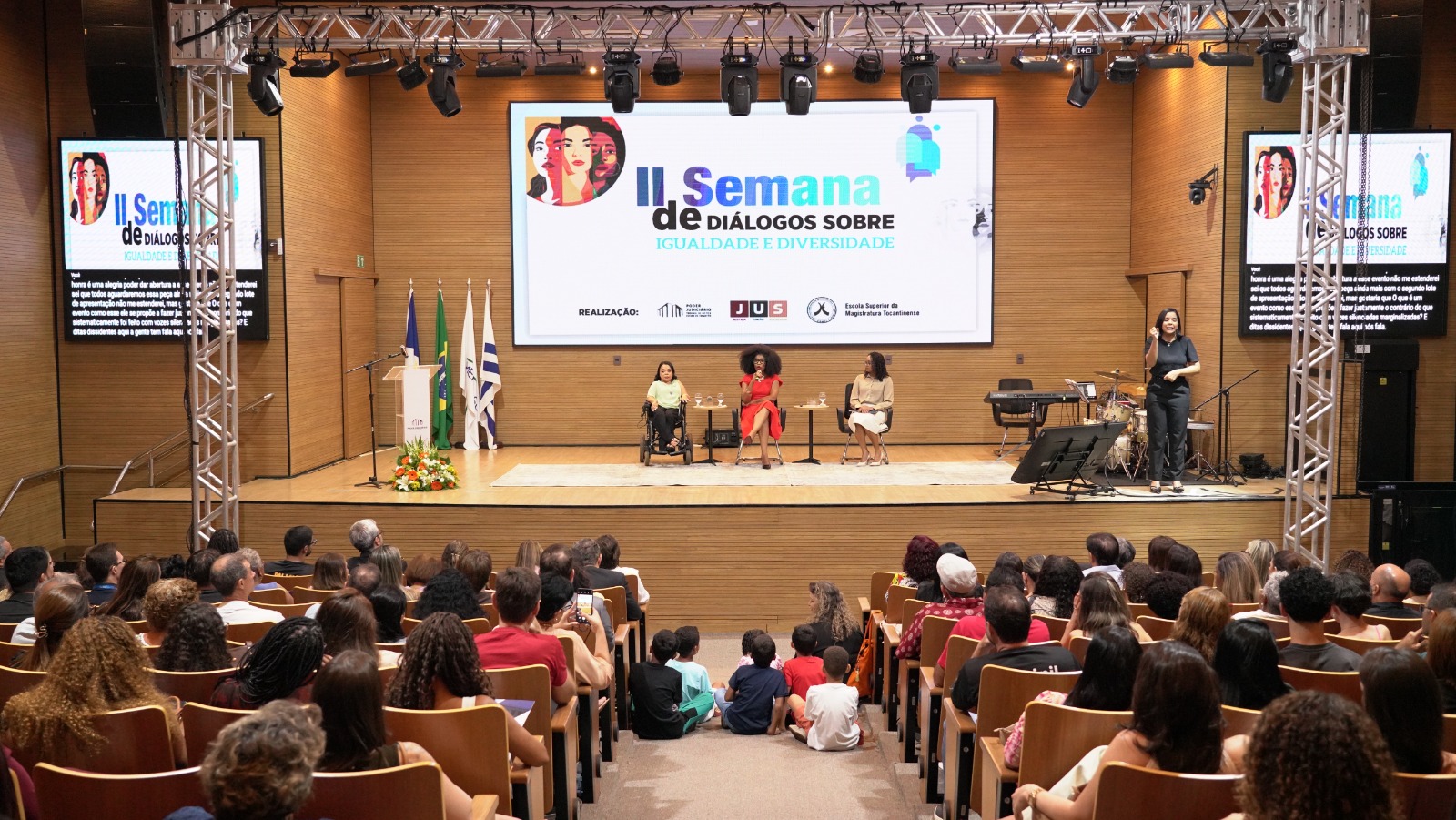
In her speech, the magistrate pointed out that understanding this erasure also requires recognizing the resistance that has always existed: critical consciousness, black intellectual production and historical protagonism that have been systematically silenced over time. For her, this silencing served to sustain the narrative that enslaved black people would be passive or agency-free, an idea that benefited power structures and inequality.
In addressing the construction of social injustices, she stated that inequality is not only sustained by direct violence or economic exclusion, but also by controlling narratives.
“Whoever controls the past controls the present. Who defines collective memory also guides the way we speak, how we are seen and how we see the world", she said.
The magistrate pointed out that the II Week of Dialogues on Equality and Diversity proposes precisely to do the reverse of historical erasure. "An event like this does the opposite of what for a long time was done with voices silenced, marginalized and treated as non-existent. Here, we speak. Here, we are heard. Here, we occupy the center of the debate", she pointed out. According to her, the commitment of the Judiciary is to recognize, legitimize and value all the voices of society.
“In order to have a fairer Judiciary, we need to know, recognize and legitimize all the voices of the society that we serve, because here we are public servers.
_thumbnail_thumbnail.jpeg)
_thumbnail_thumbnail.jpeg)
_thumbnail_thumbnail.jpeg)
_thumbnail_thumbnail.jpeg)
_thumbnail.jpeg)
_thumbnail.jpeg)
_thumbnail.jpeg)
_thumbnail.jpeg)
