


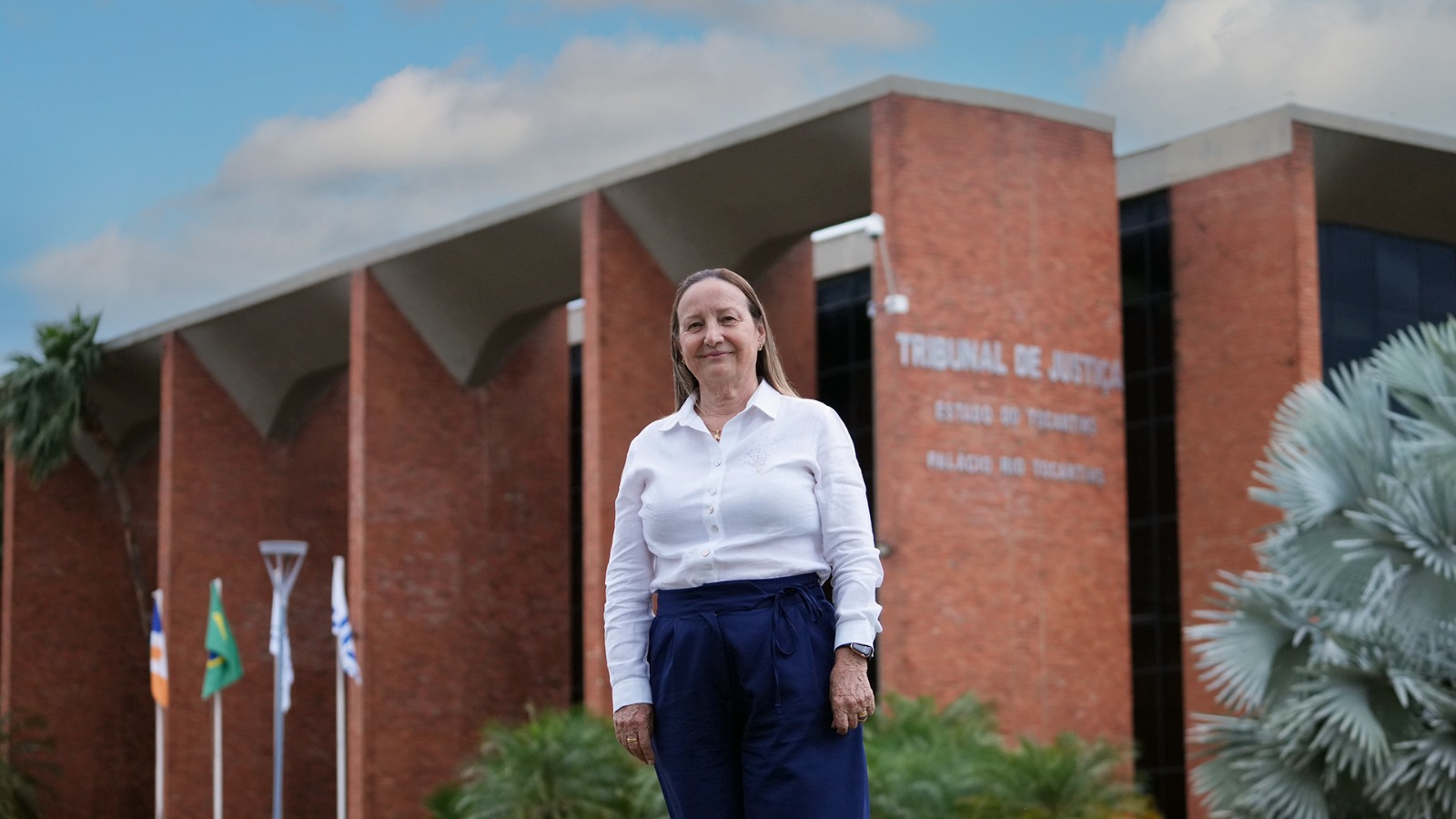
Justice is universally symbolized by a female figure, the Goddess Themis, representing law, order and impartiality. This historical symbol refers to the ideal of balance and equity that crosses centuries.
In the Court of Justice of the State of Tocantins (TJTO), this symbolism gains concrete contours in the composition of the institution. Women are the majority in the civil service, representing 58% of the labor force. They also highlight in leadership positions, filling about 60% of the vacancies.
Currently, the Judiciary of the state of Tocantins is led by women, with Maysa Vendramini Rosal in the presidency and Jacqueline Adorno in the vice-presidency.
“I strongly believe in female strength, commitment and a differentiated perspective that generate human decisions, balanced and connected with the reality of our society", says the president of the TJTO.

The Full Court of the TJTO includes Justices Maysa Vendramini Rosal, Jacqueline Adorno, Ângela Prudente, Etelvina Sampaio Felipe, Angela Haonat, Silvana Parfieniuk, Edilene Alfaix Natário and Hélvia Túlia Sandes Pereira.
Advance
The current scenario of the Full Court contrasts with the initial formation of the TJTO in 1989, when only male justices were part of the Court. Currently, the Court of Justice of the State of Tocantins is composed of eight women and eleven men. Recently, three new women justices took office, further enhancing female representation in the second instance.
Among the new magistrates is Justice Hélvia Túlia Sandes Pedreira, sworn in December of 2025 by the criterion of merit, exclusively for women.

"For many years I worked in Family Courts and I could see that they are a true portrait of our society. Most families are headed by women, and it is these mothers who seek the Judiciary to ensure food, regulate coexistence and protect their children.”
In the administrative sphere, currently most of the leadership positions of the TJTO are occupied by women. At the head of the Directorate of People Management is the civil server Paula Maia, judicial analyst for almost 15 years. She leads a team that works in the areas of care, health and institutional management.
For the director, holding a leadership position involves constant challenges that go beyond the responsibilities of the role.

“Female leadership has a great capacity for listening, mediation of conflicts, and it is more sensitive and observant.”
National
At the national level, since 2018 the Judiciary has been working for gender equity. Through the Resolution No. 255 of 2018, the National Council of Justice (CNJ) instituted the National Policy of Encouragement to Female Institutional Participation in the Brazilian Judiciary.
According to the normative, all branches and all units of the Judiciary must adopt measures aimed at ensuring gender equality in the institutional environment, proposing guidelines and mechanisms that guide the judicial bodies to act to encourage the participation of women in leadership and advisory positions, in competitive stands and as exhibitors at institutional events.
_thumbnail_thumbnail.jpg)
_thumbnail.jpg)
