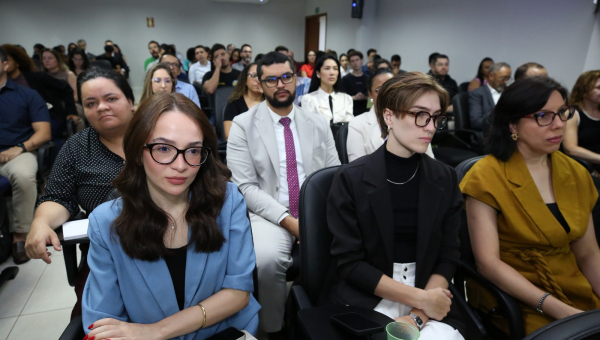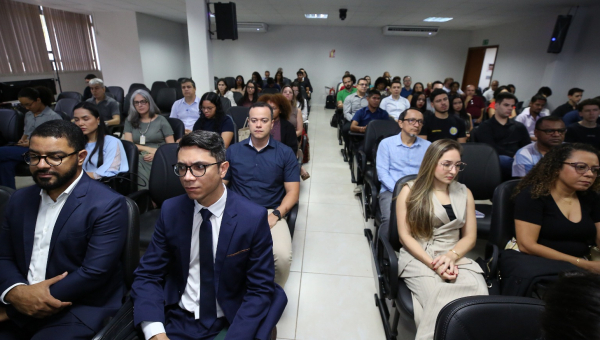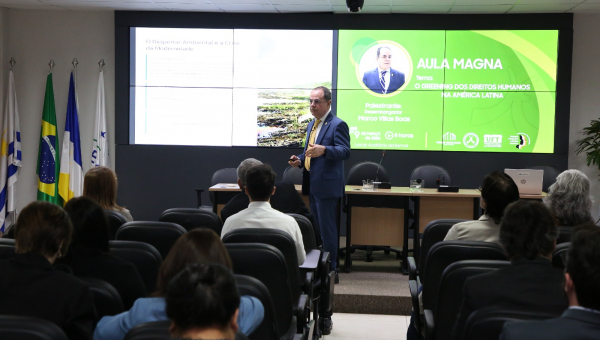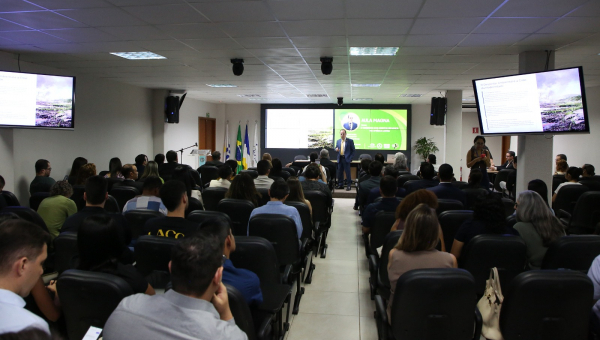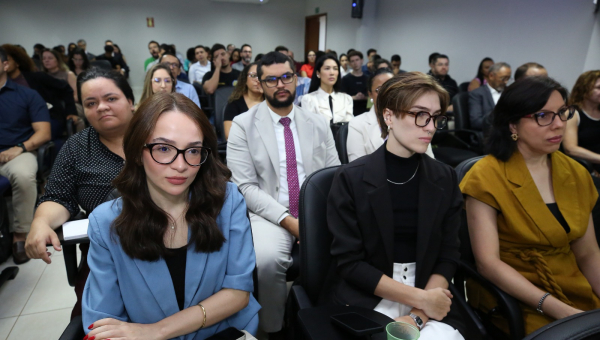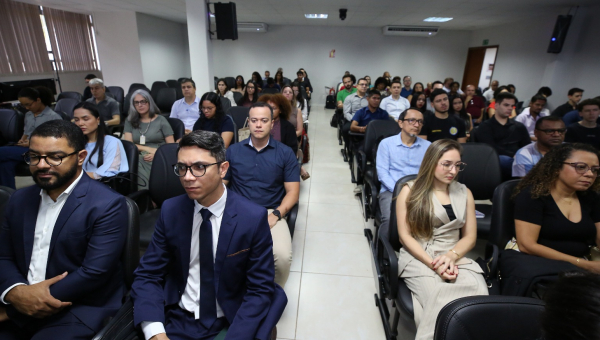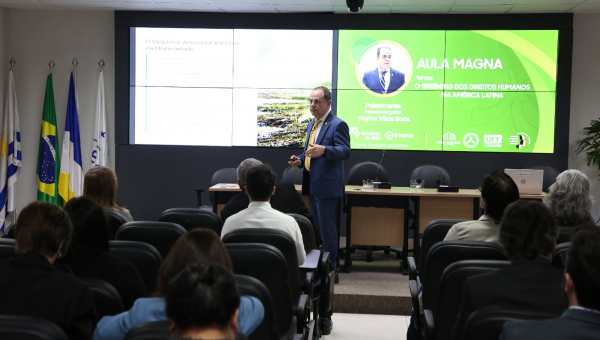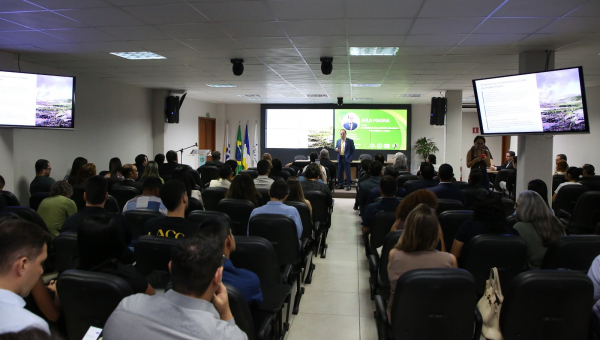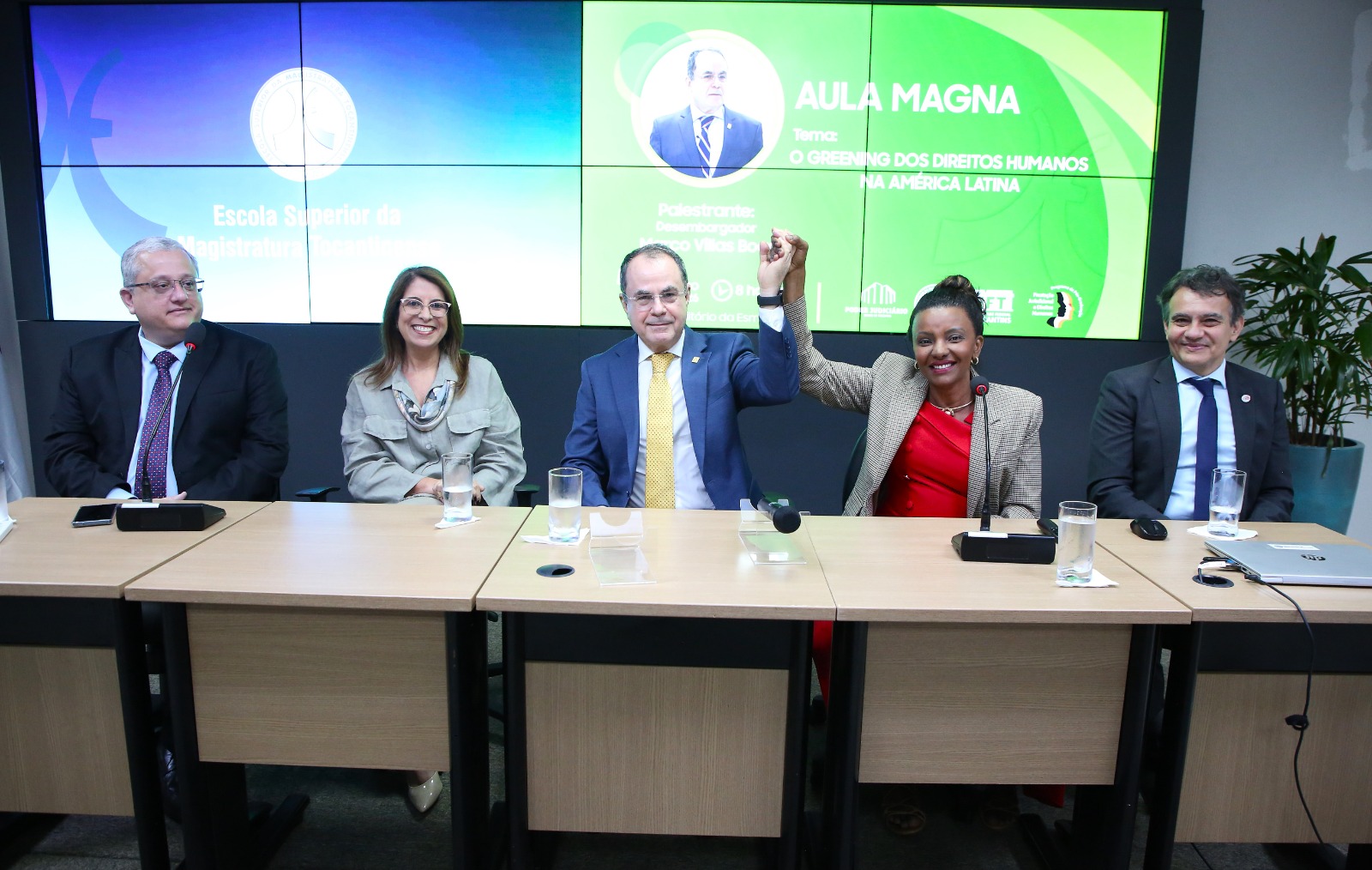
The Superior School of the Judges of the State of Tocantins (Esmat) held, in the morning of this Monday (March 9th), in the auditorium of the institution, the Magna Class to open the academic activities of the new classes of the Professional and Interdisciplinary Stricto Sensu Post graduation Program in Judicial Provision and Human Rights, developed in association with the Federal University of the state of Tocantins (UFT). The solemnity welcomed the master’s students of the 14th class and the doctoral students of the 2nd class.
The Table of Honor was composed by Justice Marco Villas Boas, general director of Esmat; Judge Odete Batista Almeida, representing the president of the Court of Justice of the State of Tocantins (TJTO), Justice Maysa Vendramini Rosal; the dean of UFT, Maria Santana Ferreira dos Santos Milhomem; Judge Allan Martins Ferreira, president of Asmeto; and Doctor Professor Tarsis Barreto, coordinator of the Post graduation Program in Judicial Provision and Human Rights.
Opening
In his speech, the Doctor Professor Tarsis Barreto emphasized the quality of the academic production of the program and the role of the master’s and PhD in the transformation of the reality of the people from the state of Tocantins, with reflections on the improvement of jurisdiction and the implementation of human rights. "By production, it really shows the high quality of our faculty and our student body," he said. When addressing the students, he emphasized that the main message of the program is a commitment to scientific production.
“The message is this: production. Capes excels, without a doubt, for the quality, for the excellence of these productions (...) and here in the state of Tocantins it has made science of very high quality, and this program is truly transforming the reality of the state of Tocantins. We are increasing the jurisdiction with outstanding products and improving, increasingly, human rights", he said.
The dean of UFT, Maria Santana Ferreira dos Santos Milhomem, made a special greeting to women, in reference to the International Day of Women, celebrated on the eve (Sunday, March 8th), and she stressed the importance of academic formation as an instrument of transformation. "We women need, in fact, to be in the places where we want to be," she said.
She also encouraged the students to persist in their academic and professional trajectory. "You can get anywhere. Just study, persevere, fight and break obstacles", she declared. The dean also emphasized the role of the university in building responses to the problems of society.
“It is in this place, in the school, in the university, that we have to think and build solutions for the problems of society", she added.
Representing the president of the TJTO, Justice Maysa Vendramini Rosal, Judge Odete Batista Almeida conveyed the institutional greeting to the new class entrants. "She tasked me to bring everyone a fraternal hug, welcome, and also congratulations to all of you," she stated. Member of the faculty, the judge also emphasized the significance of the training offered by the institution.

“We have already experienced this phase and know how much we should be grateful for this opportunity", she said.
Also present to the Table, Judge Allan Martins Ferreira emphasized the integrative character of the program and the participation of different institutions of the Justice System. "Moreover, it [the program] does not close only to the Judiciary. He opens up and invites the Public Defender’s Office, the State, the Municipalities, the State Prosecution and all members of the Justice System, so that we have a justice service more committed to human rights and also to excellence," he said.
According to the magistrate, this is one of the differentials of the training offered. "That is what, in practice, our master’s and doctorate deliver." Commenting on the institutional partnership, he added:
“It is a proud partnership that has already borne fruit, continues to bear fruit and will continue to produce results”.
Lecture
Following, Justice Marco Villas Boas delivered the Magna Class with the theme on "The "greening" of the jurisprudence of the Inter-American Court of Human Rights". During the exhibition, he addressed the advancement of environmental protection in the inter-American human rights system and the consolidation of a healthy environment as an autonomous human right.

Throughout the presentation, he spoke with authors of reference in the legal and socio-environmental field and drew attention to the importance of freedom of expression and access to information for environmental democracy. In closing, he defended the need for a legal training connected to contemporary transformations.
“Environmental protection is no longer just a public policy; it asserts itself as a fundamental human right, indispensable to the very survival of society," he said.