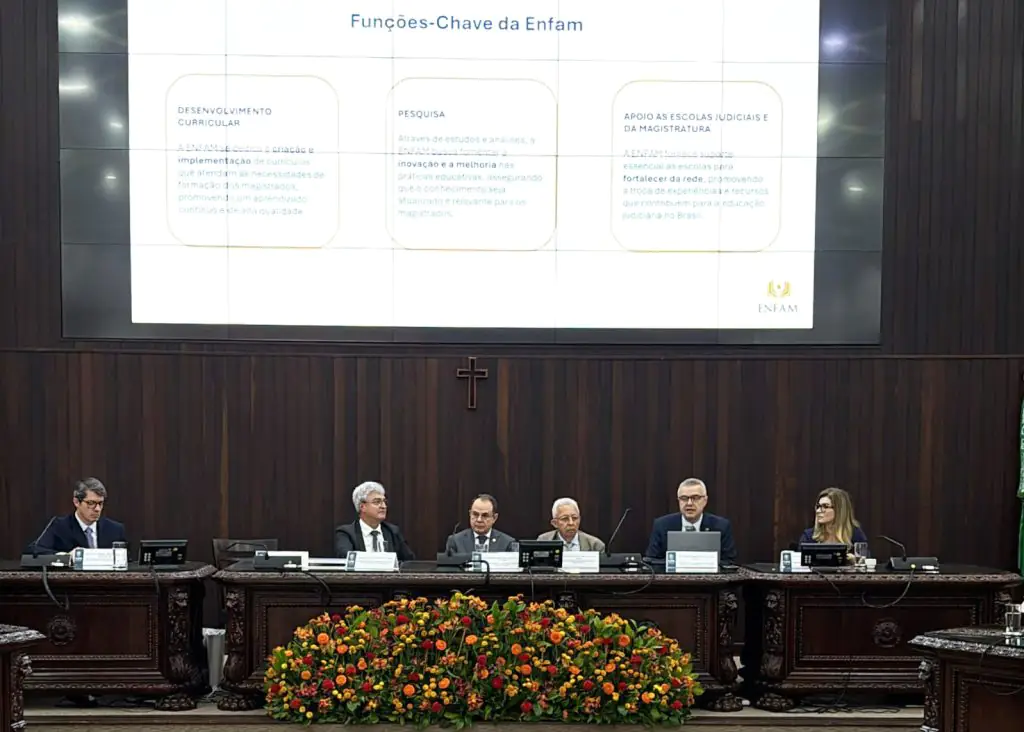
“The initiative of bringing together Judicial Schools shows institutional courage. Courage to look beyond geographical borders, to give up isolated solutions, to bet on networks, collective intelligence and methodologies that approach and build the Judiciary in Brazil daily", said the general director of the National School for Training and Improvement of Magistrates (Enfam), Minister Benedito Gonçalves, to the participants of the annual meeting of the National Network of Judicial and Magistracy Schools (Renejum) and the LXI Meeting of the Permanent College of Directors of State Schools of the Magistracy (Copedem). The event began on Thursday (Dec 4th) and it continues until Friday (Dec 5th), in the city of Curitiba.
The programming began at the headquarters of the Court of Justice of the State of Paraná (TJPR), bringing together authorities such as the president of Copedem and general director of the Superior School of the Judges of the State of Tocantins (Esmat), Justice Marco Villas Boas, who highlighted the importance of cooperativism among schools.
“We cannot live in isolation. The cooperativism between the Judicial and Magistracy Schools is very important for the development of joint activities. We are able to carry out actions and programs that can qualitatively improve the Judiciary, as it has already happened, and we can move forward", he said.
The justice also highlighted the creation of Renejum in this process, with its importance to avoid repetitive or obsolete actions and stimulate the contribution among schools, with the objective of permanent training of members of the Judiciary and civil servers. Villas Boas also spoke about the recent creation of the National School of the Judiciary (Enaju), by the National Council of Justice (CNJ), which was represented by its director, Daniel Avelar.
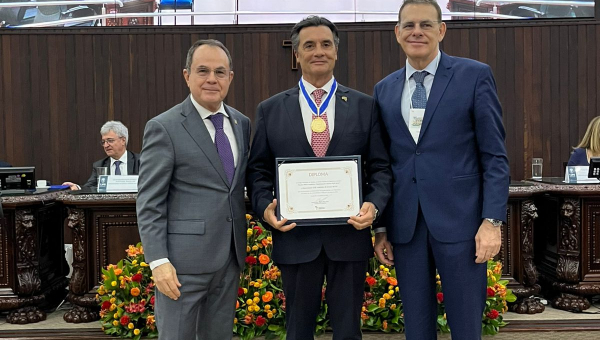
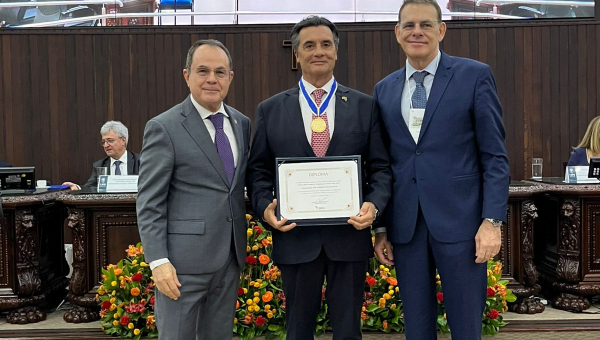
After a brief presentation of the authorities present in the Board, medals and tributes were awarded by Copedem. Then, the general director of the Judicial School of the state of Parana (Ejud-PR), Justice Roberto Bacellar, held the opening lecture on life tenure of magistrates. He addressed the Resolution no 654 of the CNJ, of November 4th, 2025, which had contribution from Enfam from a study carried out by a working group.
"The idea is that of an interinstitutional program, worked together with the general internal affairs. This is because it was perceived that either the school or the internal affairs assumed the role of accompanying life, without there being follow-up of these magistrates", he explained.
Bacellar said that for this study they made a comparison with aviation schools. "We found a very close relationship among them, the accompaniment of more experienced professional throughout the entire training process," he said. The idea of the Resolution, based on a proposal that Enfam sent to the CNJ, is to standardize the lifetime without setting up and have objective criteria so that magistrates know how they are being evaluated.
For the justice, magistrates need more than technical knowledge. "It is necessary to develop know-how, which goes beyond what is in the manuals, constitution and laws. There are things that are not in the manuals, and to be competent is to have the ability to solve complex situations planned and unplanned. That is where the fundamental role of guidance comes to this new magistrate, so that it can have corrected the functional inadequacies", he said.
This work will be developed in partnership between the general internal affairs and the judicial school and it provides for the creation of a new figure called judge preceptor, who will have a specific training to know how to welcome, accompany and remedy deficiencies of new members of the Judiciary. In addition, it provides for a permanent committee of vitalicization, which can help the general internal affairs commission in this evaluation process and make some suggestions. "What changes is that, for the first time, we will have schools and general internal affairs speaking the same language, knowing all the criteria and aspects to be considered”.
Future scenario of Enfam
Then, the executive secretary of Enfam, Leonardo Peter, made a presentation on the prospective scenario of Enfam and addressed partial results of visits to judicial schools, as well as new educational guidelines. Among the good practices identified in the visits are continuous training trails, practical thematic forums, events on social issues and the realization of laboratory educational solutions.
Leonardo Peter highlighted the National System of Schools of the Federal Judiciary (Sinemaf), developed by CEMAF (Council of Federal Judicial Schools) in partnership with CEJ (Center for Judicial Studies) and Esmaf (Federal School of the Judges), and talked about the incorporation of this tool to Renejum to establish a unified calendar among schools. "The idea is to simplify the visualization so that schools can share this information and consult them when planning. Having access to the calendar, it is possible to develop partnerships", he said.
Finally, the executive secretary of Enfam pointed out future strategic directions of Renejum, as more interlocution with the CNJ and pedagogical alignment; development of BI panel (Business Intelligence) of all magistrates training of the Network with interactive calendar; creation of a digital environment of good practices; normative flexibility; creation of an Enfam-Renejum seal for non-accredited actions; expansion of the target audience of training, including civil servers; training in socio-emotional skills; creation of a national course sharing bank from this calendar; creation of inter-school thematic centers and planning of national meetings in 2026.
_thumbnail_thumbnail.jpeg)
_thumbnail_thumbnail.jpeg)
_thumbnail_thumbnail.jpeg)
_thumbnail_thumbnail.jpeg)
_thumbnail_thumbnail.jpeg)
_thumbnail_thumbnail.jpeg)
_thumbnail_thumbnail.jpeg)
_thumbnail.jpeg)
_thumbnail.jpeg)
_thumbnail.jpeg)
_thumbnail.jpeg)
_thumbnail.jpeg)
_thumbnail.jpeg)
_thumbnail.jpeg)