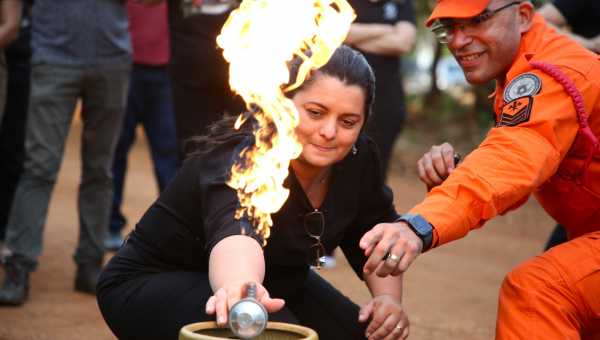
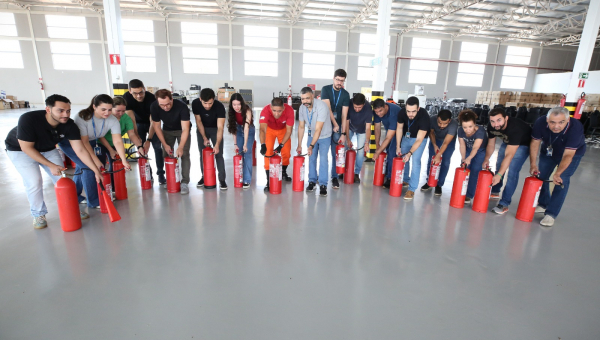
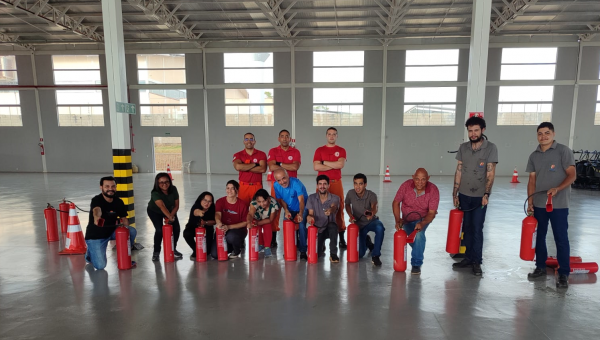
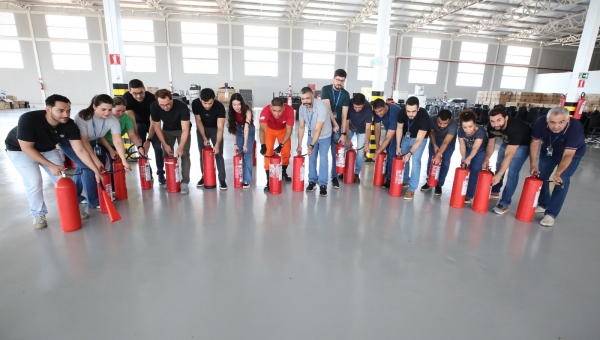
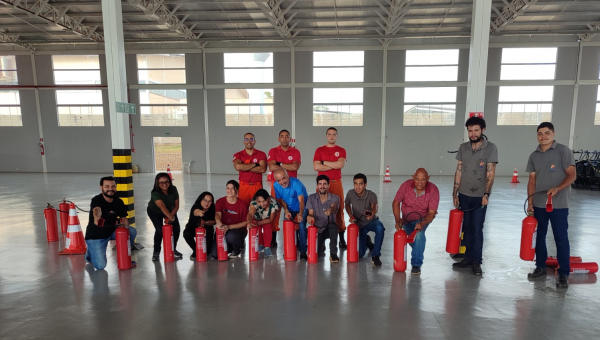
Over the course of 2025, the Superior School of the Judges of the State of Tocantins (Esmat) held 11 Training classes on Fire Brigade, training more than 170 civil servers, employees and outsourced of the Judiciary to act in emergency situations, focusing on fire prevention and fighting principles.
Offered in a hybrid format, the course served districts from different regions of the State, with a workload that combined theoretical content and supervised practices. The curriculum matrix included guidelines on the correct use of fire extinguishers, first aid, building abandonment plan, among other topics essential to the construction of an institutional safety culture.
The training had the direct involvement of instructors from the Military Fire Department, who stressed the strategic relevance of the course for the security of the units of the Judiciary.
The 3rd Sergeant Tonaco, military firefighter acting in the Military Advisory (ASMIL/ TJTO) and one of the instructors of the classes held throughout the year, stressed that the training of the brigade members represents more than a legal requirement - it is a strategic measure of collective protection, that strengthens the capacity of the judicial units to respond to critical situations.
“The training provided to civil servers essential knowledge for the preservation of lives and for the protection of institutional heritage, reinforcing the security of all who use these spaces. [...] This preparation meets the requirements of the State Law 3.798, of 2021, and the Technical Standard no 12 of the Military Fire Department of the state of Tocantins, constituting an important step towards fulfilling the legal responsibilities of the institution", he explained.
The 3rd Sergeant Lynneker, also military firefighter working at Asmil, shared a perspective marked by experience in the classroom and practical exercises. Acting directly in the conduct of the classes, he observed the level of participation and commitment on the part of the students, which, according to the instructor, evidences the institutional maturity of the Judiciary with regard to the culture of prevention and self-protection.
“Leading these classes was never just to comply with protocols; it was also to ensure that civil servers, employees and outsourced became competent and conscientious security agents, and I see that this goal has been fully achieved. We have seen the theory come to life in our practical exercises. And this knowledge in the workplace is the pillar of our collective security," he said.
_thumbnail_thumbnail.jpeg)
_thumbnail_thumbnail.jpeg)
_thumbnail_thumbnail.jpeg)
_thumbnail_thumbnail.jpeg)
_thumbnail_thumbnail.jpeg)
_thumbnail_thumbnail.jpeg)
_thumbnail_thumbnail.jpeg)
_thumbnail_thumbnail.jpeg)
_thumbnail_thumbnail.jpeg)
_thumbnail_thumbnail.jpeg)
_thumbnail_thumbnail.jpeg)
_thumbnail_thumbnail.jpeg)
_thumbnail_thumbnail.jpeg)
_thumbnail.jpeg)
_thumbnail.jpeg)
_thumbnail.jpeg)
_thumbnail.jpeg)
_thumbnail.jpeg)
_thumbnail.jpeg)
_thumbnail.jpeg)
_thumbnail.jpeg)
_thumbnail.jpeg)
_thumbnail.jpeg)
_thumbnail.jpeg)
_thumbnail.jpeg)
_thumbnail.jpeg)