


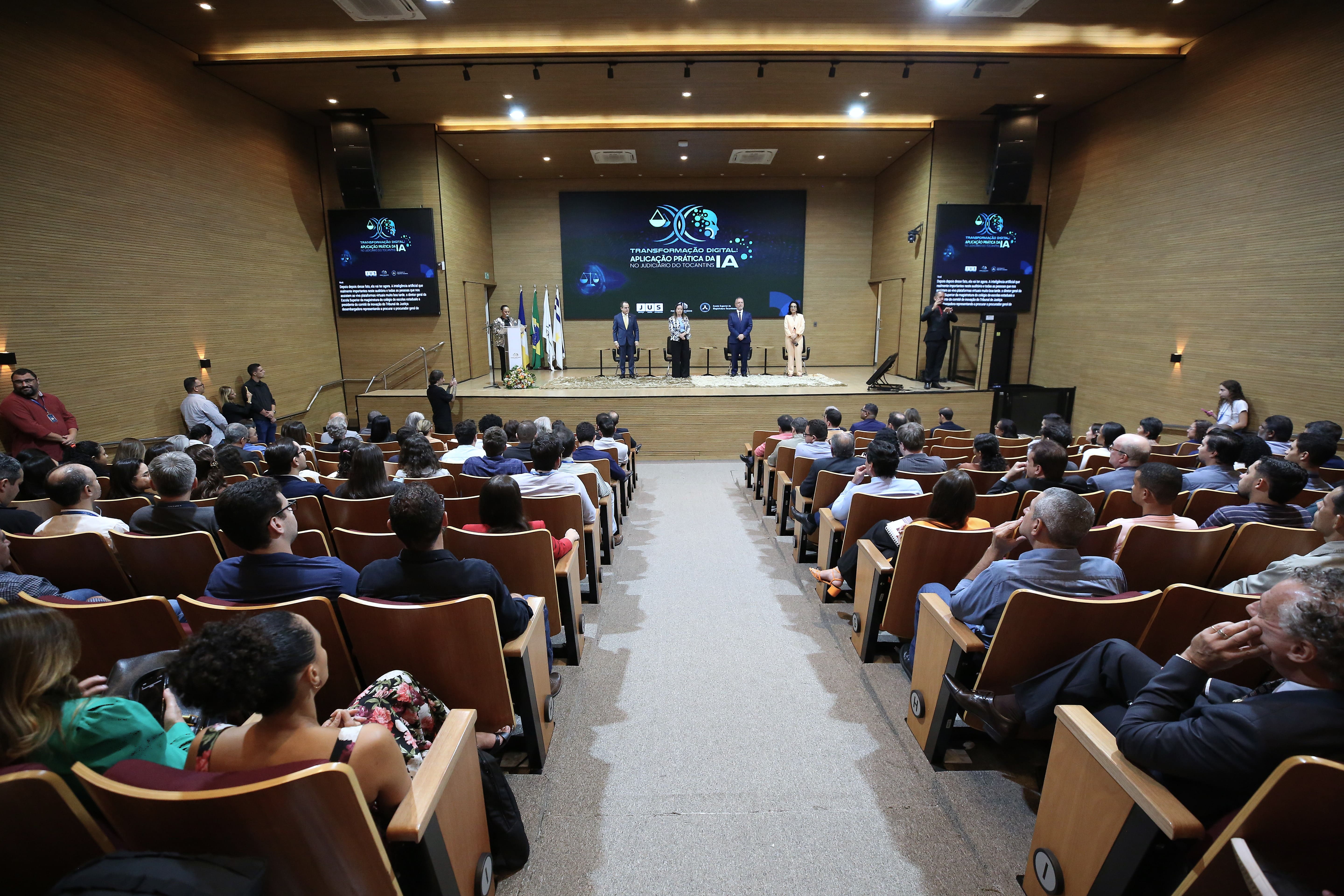
The use of artificial intelligence as a tool to support efficiency, innovation and improvement of judicial services marked the opening of the event on "Digital Transformation: Practical Application of AI in the Judiciary of the state of Tocantins", held this Monday afternoon (April 6th), in the auditorium of the Court of Justice of the State of Tocantins (TJTO).
On the solemnity, the general director of the Superior School of the Judges of the State of Tocantins (ESMAT) and president of the Permanent College of Directors of State Schools of the Magistracy (Copedem), Justice Marco Villas Boas, announced the new MBA in Artificial Intelligence Applied to the Judiciary, initiative aimed at the qualification of magistrates and civil servers to act in this new scenario.
During the speech, the justice highlighted that the training proposal is aligned with the institutional movement of modernization of the Judiciary and responsible use of new technologies.
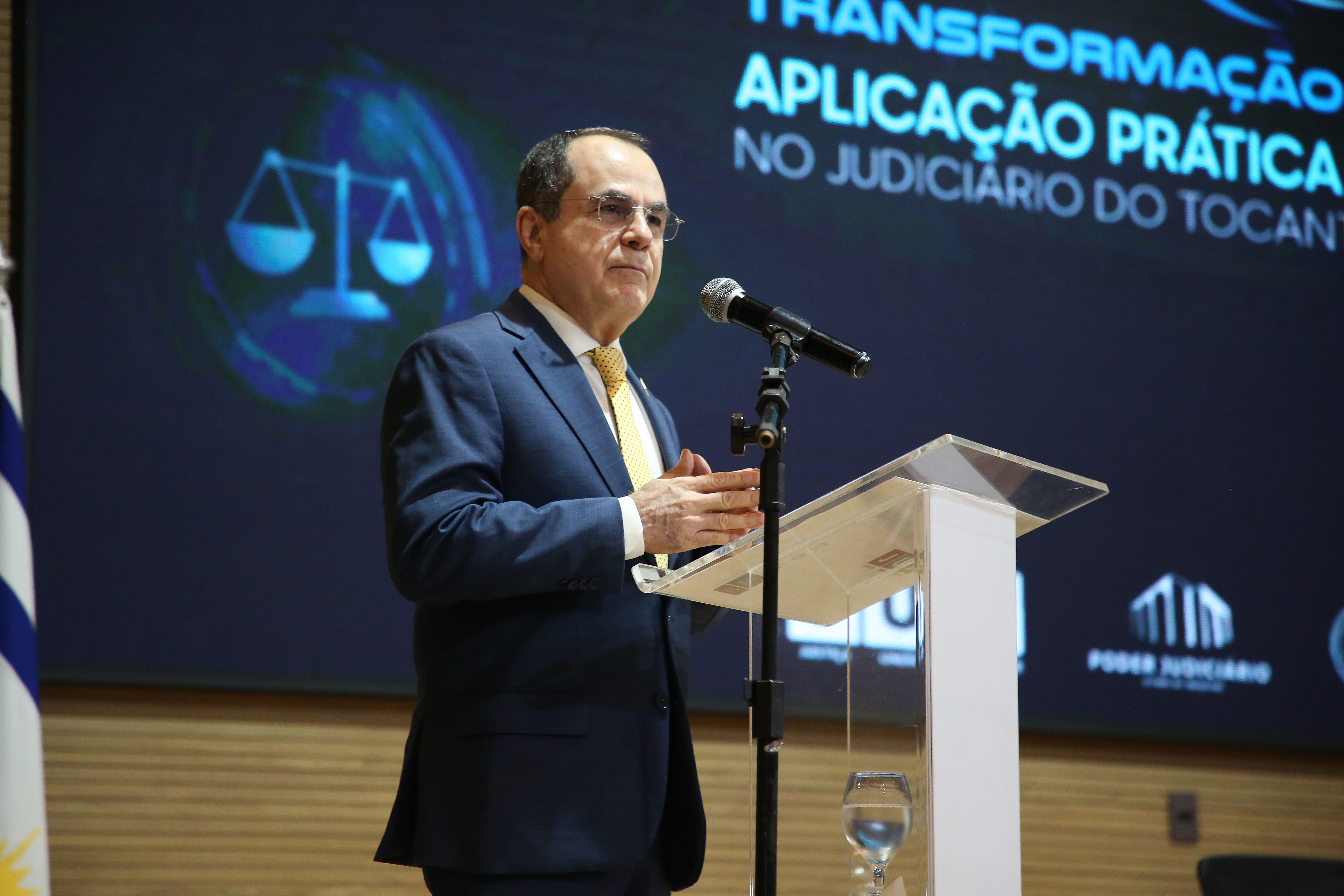
“The course aims to prepare professionals to act in this new scenario and it will seek to develop skills for the ethical, responsible and qualified use of artificial intelligence tools within the Judiciary", he presented.
When contextualizing the announcement, the justice also associated the new training with the technological transformation trajectory experienced by the Judiciary in recent decades and the work that the School has been developing in this area. In his speech, he emphasized that AI tools do not replace human responsibility in the analysis and validation of information.
"AI tools do not have legal hermeneutics," he said, arguing that the institutional use of technology should always be linked to "good practices, with ethics and responsibility."
He also cited the number of more than one thousand three hundred magistrates and civil servers of the Judiciary of the state of Tocantins (PJTO) trained with courses and events offered by Esmat since 2024, in a cycle of training aimed at democratizing knowledge about emerging technologies in the Judiciary.
Innovation without losing the human factor
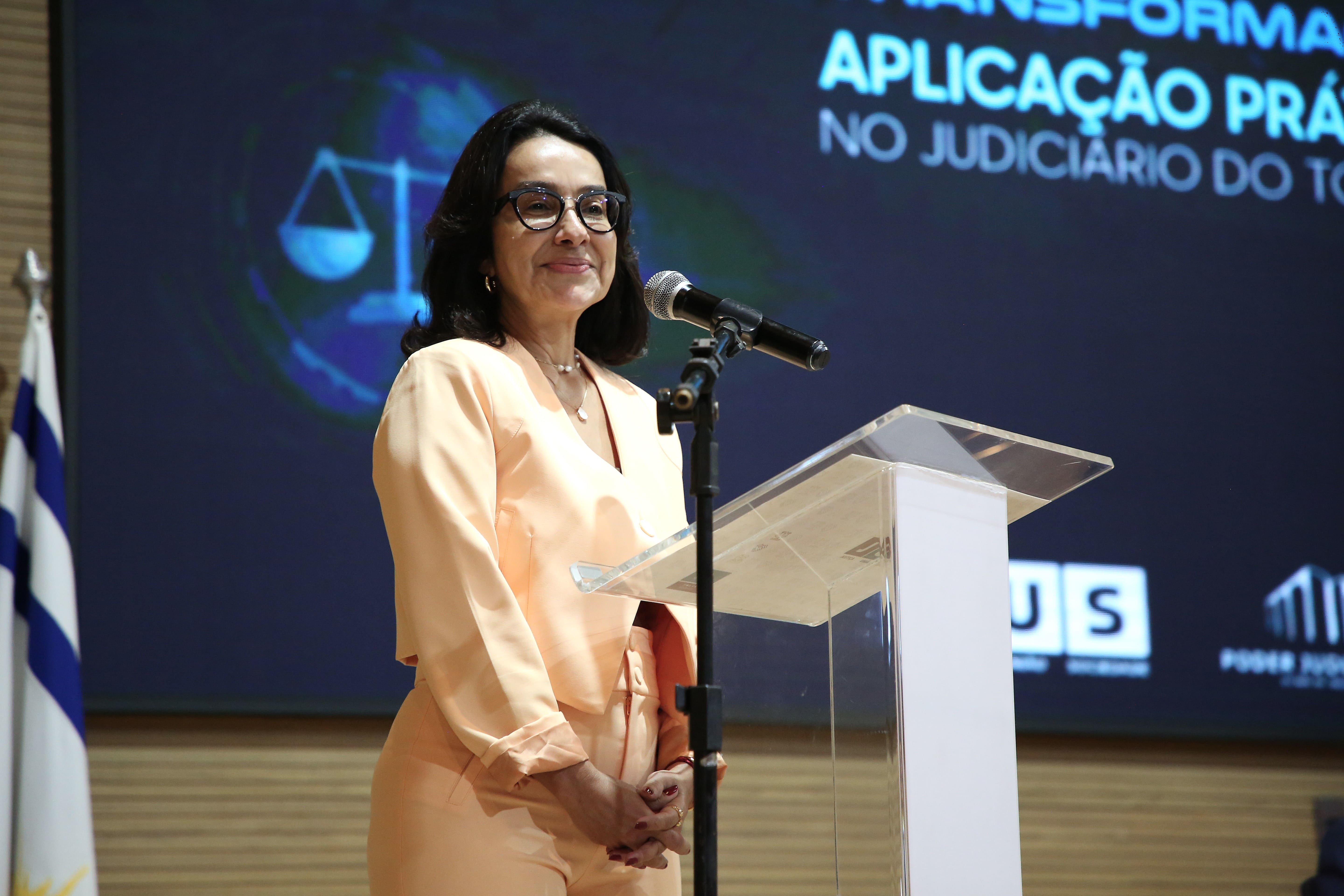
Also at the opening, the president of the Innovation Committee of the Court of Justice, Justice Hélvia Túlia Sandes Pedreira, stressed that innovation has already integrated contemporary routines and defended that technological advancement must preserve the centrality of the human.
“Let’s receive all these innovations with possibilities," she said.
In the same line, she highlighted the expectation that artificial intelligence will contribute to expand the time devoted to what she classified as essentially human: "care, support and share”.
The general chief of Justice, Judge Pedro Nelson de Miranda Coutinho, saw the moment as another stage of structural change in the Judiciary of the state of Tocantins.
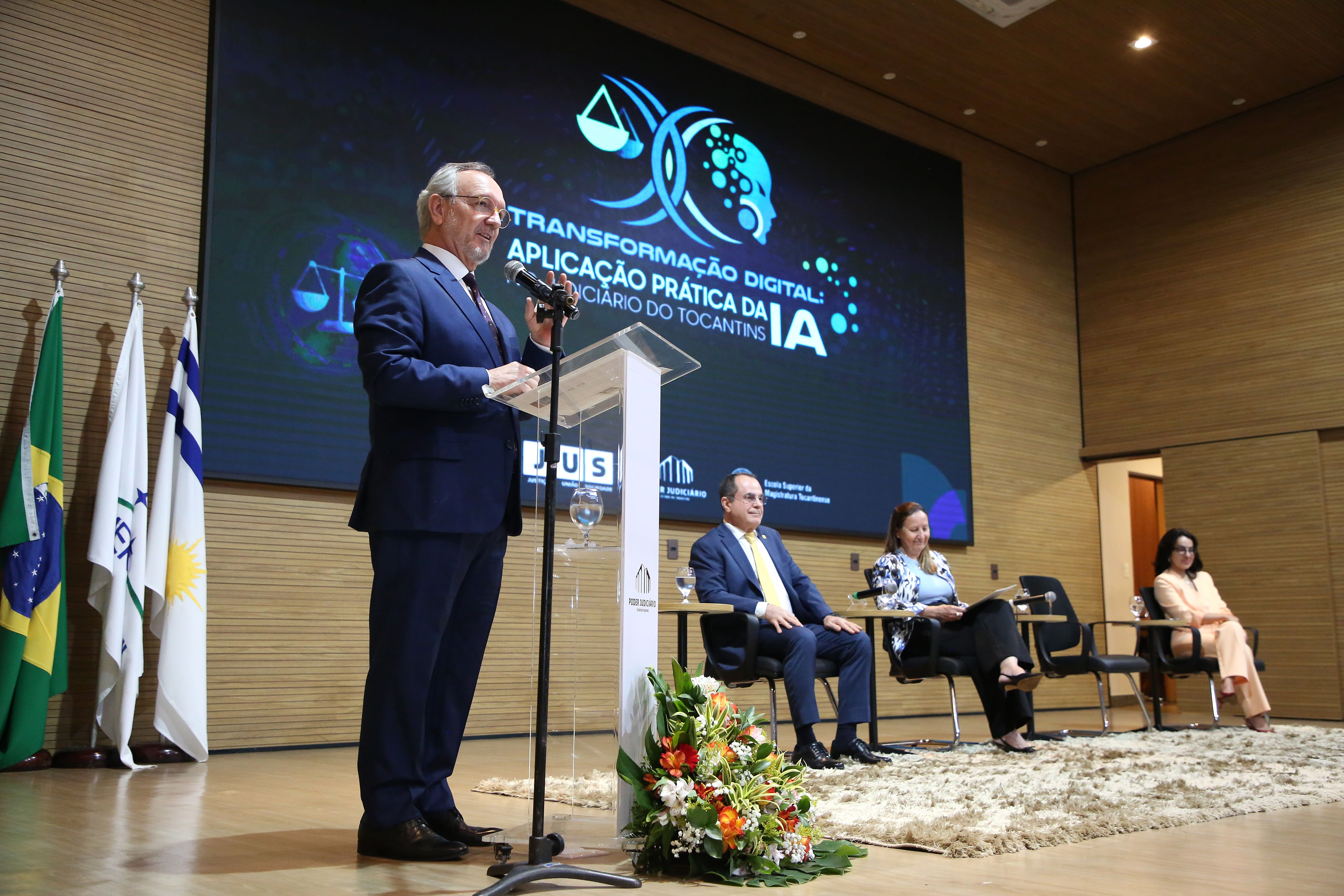
“The use of artificial intelligence represents a historical milestone," he commented. Then, he compared the current scenario to the transition of physical processes to electronics and highlighted that the challenge now is to build this new stage with institutional responsibility. For him,
“technological innovation is a great ally of Justice, provided it is used with purpose, responsibility, and commitment to the effectiveness of judicial provision.
Technology, Governance and Prominence of People
On that occasion, the president of the TJTO, Justice Maysa Vendramini Rosal, also highlighted the strategic nature of the ongoing process in the Judiciary of the state of Tocantins. In her statement, she said that the digital transformation program "raises the technological maturity of our institution" and allows, with each new step, the improvement of judicial provision.
The justice also emphasized that technological advancement has been built with governance, infrastructure and valorization of people.
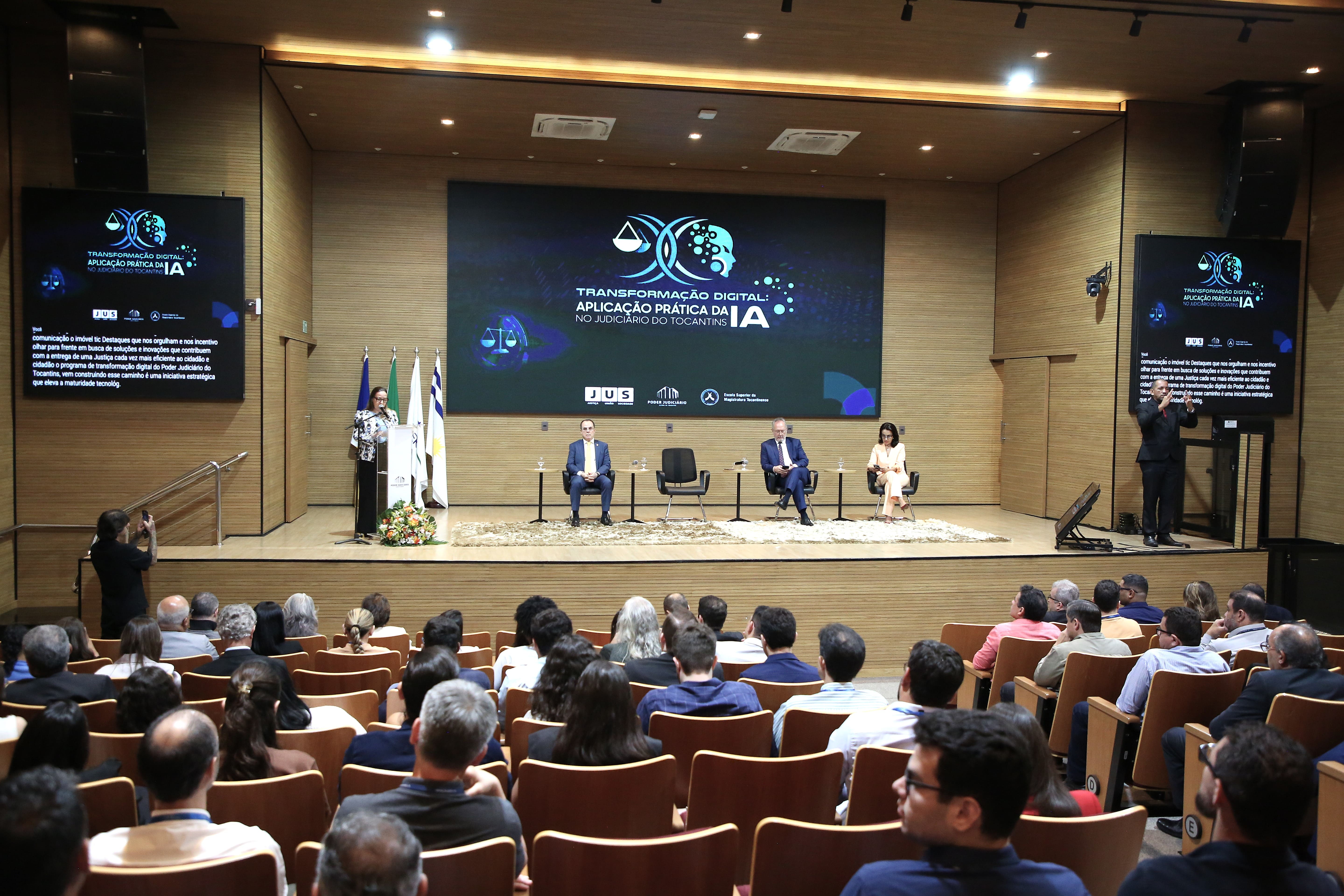
“Digital transformation is not just about systems. It’s also about people," she said.
Programming
The programming of the afternoon featured the lecture: "Extended Humanity: Leadership, Value and AI Agents in the Future of Work", with Wesley Vaz Silva, as well as the discussion table on the Digital Transformation Program and the exhibition on the LIIARES Ecosystem.
The moment was also marked by the presentation of new tools of the TJTO, with a focus on the new Gazzette of Justice with artificial intelligence, which translates, simplifies and brings the Judiciary even closer to the citizen.

The IAO solution, developed entirely by the civil servers of the Court, will have more information published on the website of the TJTO.
As announced, the MBA Notice will be published later this week, and further information will be released soon through the official Esmat channels.
