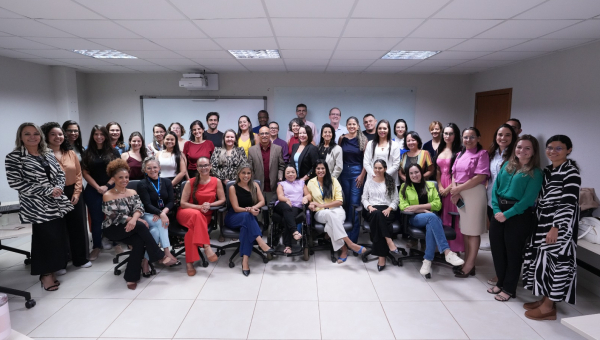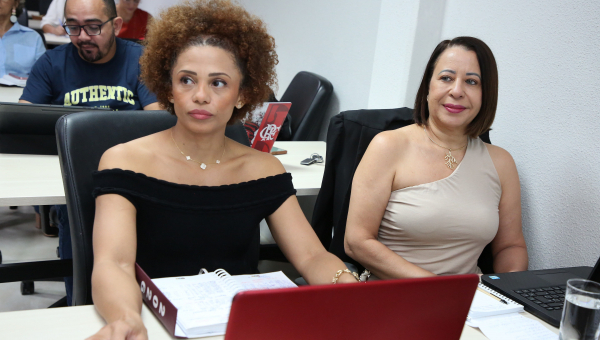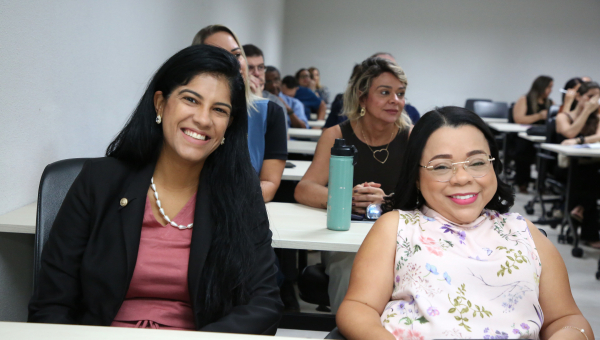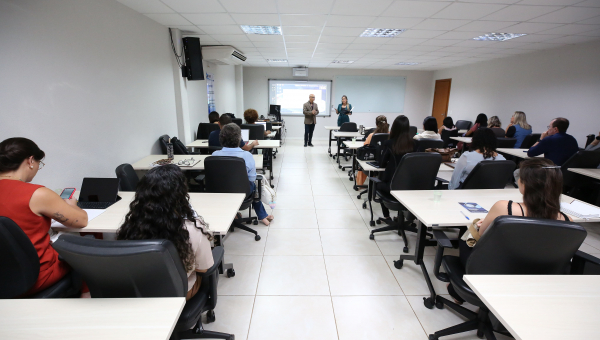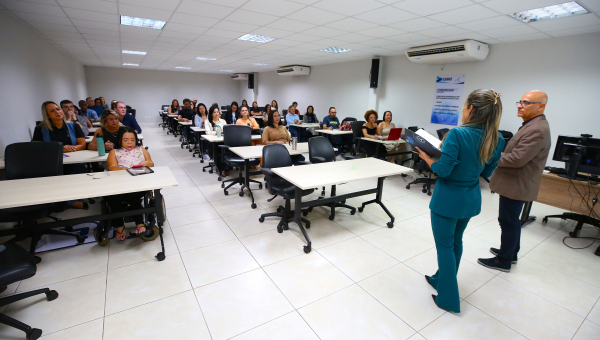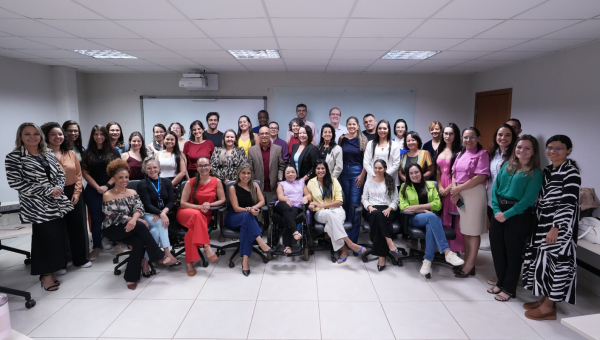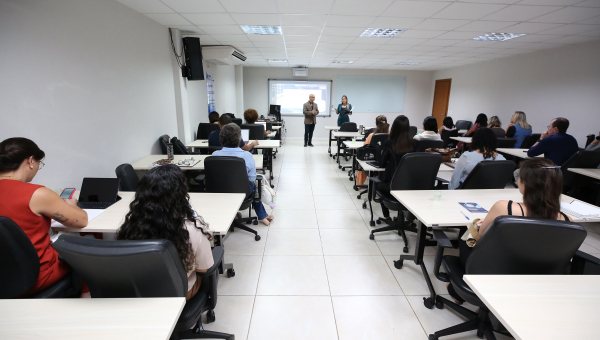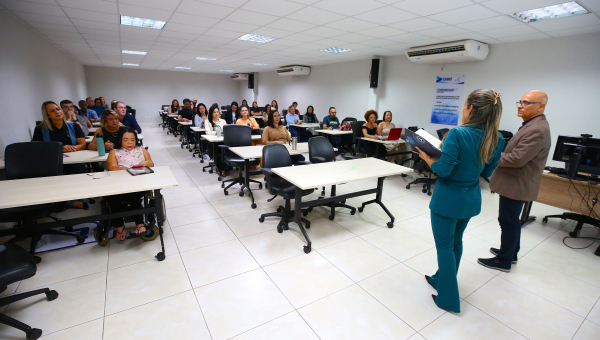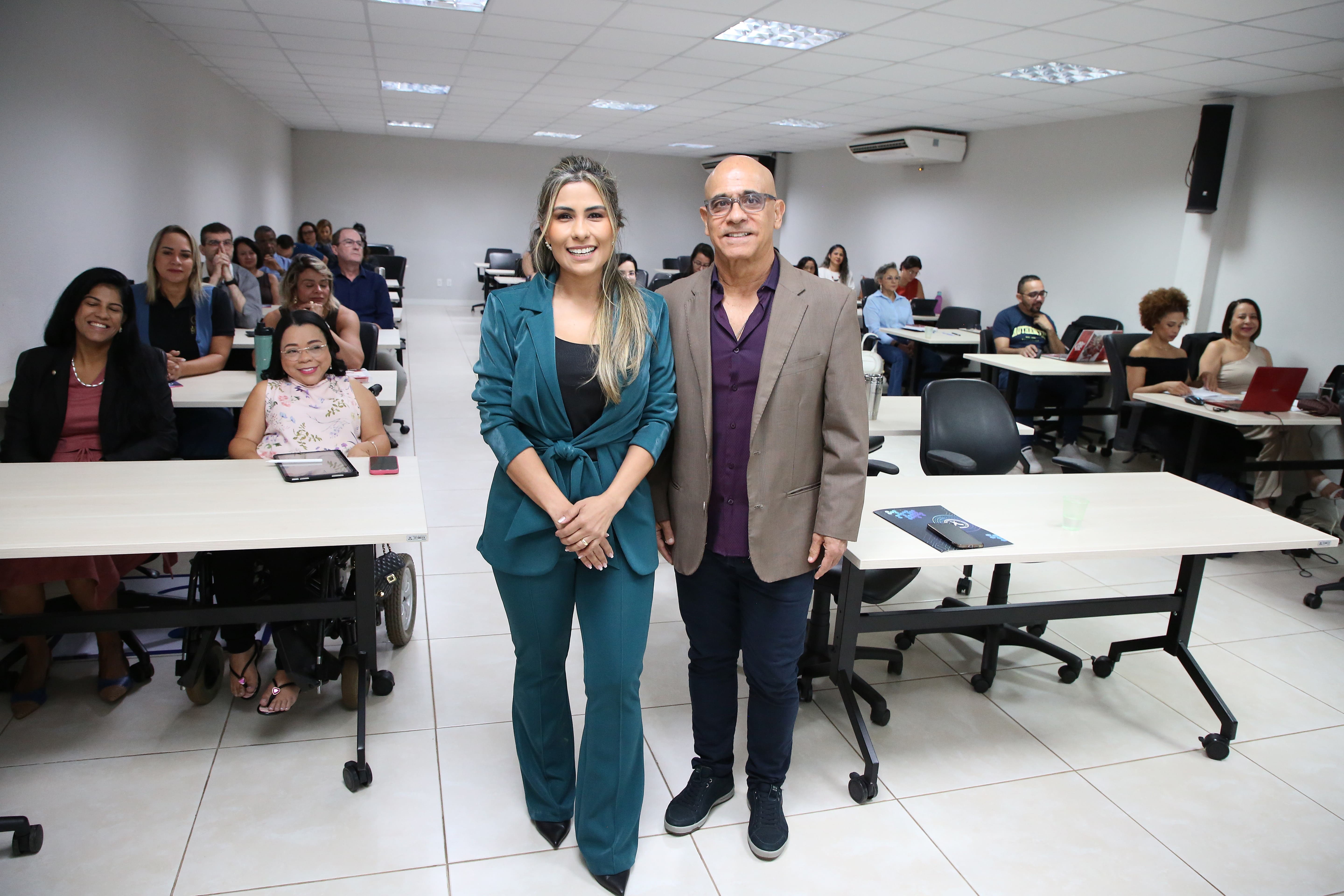
The Superior School of the Judges of the State of Tocantins (Esmat) began, on Tuesday (April 7th), the course on "Understanding the Biopsychosocial Model of Disability," bringing together civil servers of the Judiciary of the state of Tocantins, professionals in the areas of accessibility, people management, and health, besides representatives of partner institutions of the Judiciary of the state of Tocantins.
Coordinated by Angela Issa Haonat, the training proposes an immersion in a theme that is increasingly central to public institutions: understanding disability from an approach that goes beyond the purely medical perspective and also considers social barriers, environmental and institutional that impact the full participation of people in society.
At the opening, the speaker welcomed participants and highlighted the importance of the presence of professionals from different areas in building more inclusive institutional practices. "So, I am very happy to see this room full, feel welcomed," he said.
The training aims to understand the biopsychosocial model of disability, its historical evolution, its normative foundations and its future perspectives. Throughout the programming, topics such as the rights and affirmative actions guaranteed to people with disabilities, the differences between medical, social and biopsychosocial models, as well as the interfaces among the International Classification of Functionality, Disability and Health (ICF), the Convention on the Rights of People with Disabilities and the Brazilian Law for the Inclusion of Persons with Disabilities.
The activities are led by Miguel Abud Marcelino, master in Sciences from ENSP/Fiocruz. Researcher at the Center for Information, Public Policies and Social Inclusion (NIPPIS) and member of working groups responsible for studies, development and implementation of biopsychosocial assessment models for people with disabilities.

Distributed in four modules, the course covers everything from the historical context of the movement for the rights of people with disabilities to the analysis of the main assessment tools currently used or under development in the country, including the Continuous Provision Benefit (BPC), the Brazilian Functional Index Applied to the Retirement of the Disabled Person (IF-BrA) and the Brazilian Modified Functionality Instrument (IFBrM).
The initiative integrates accessibility and inclusion actions developed under the Judiciary of the state of Tocantins and it is aligned with the Resolution No. 401 of the National Council of Justice (CNJ), 2021, which deals with accessibility and inclusion guidelines for people with disabilities in the Judiciary. In person, training continues until this Wednesday (April 8th), with a class load of 16 hours.