


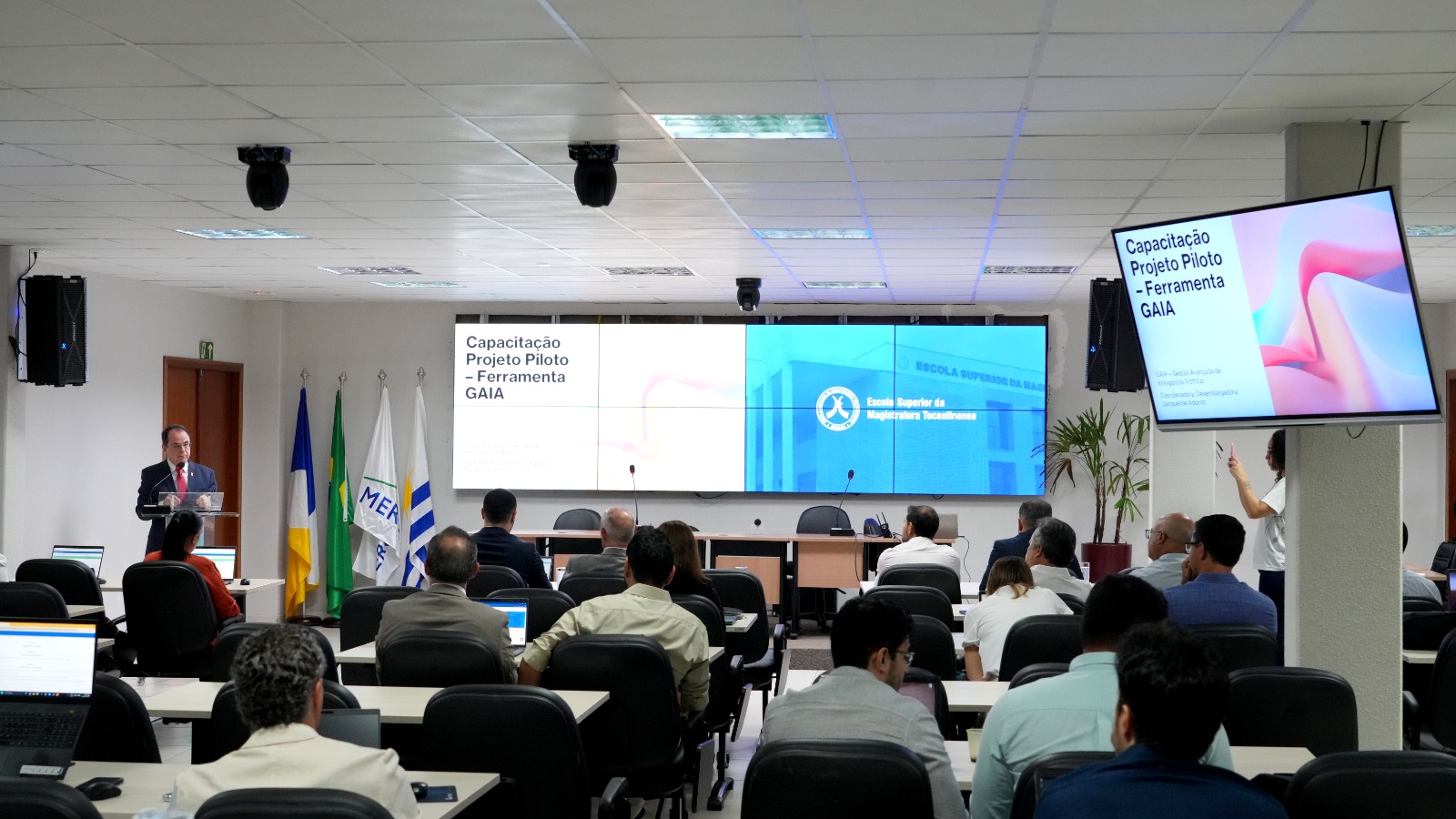
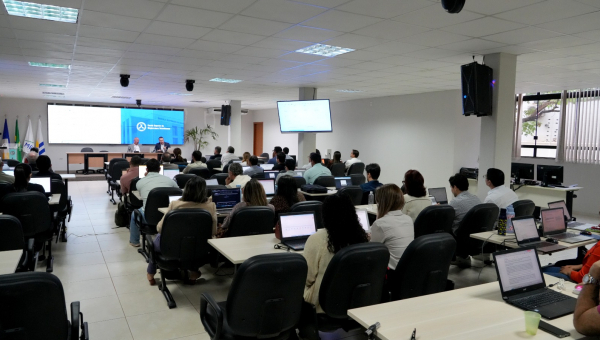
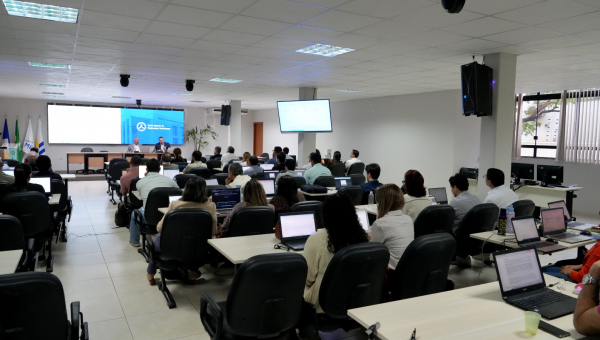
The continuous search for innovation won another chapter in the Court of Justice of the State of Tocantins (TJTO). Opening the month of December, it began, in the morning of this Monday (Dec 1st), the training for the GAIA Pilot Project tool. The activity was held in the auditorium of the Superior School of the Judges of the State of Tocantins (Esmat), with the participation of magistrates, civil servers and invited experts from the state of Rio Grande do Sul.
Developed by the Court of Justice of the state of Rio Grande do Sul (TJRS), GAIA is being implemented in an integrated way to the Eproc System. The proposal is to optimize the work routine, focusing on agility, safety and efficiency.
“We cannot be Carolina”
During the opening, the general director of Esmat and president of the Permanent College of Directors of State Schools of the Magistracy (Copedem), Justice Marco Villas Boas, made a reflection on the technological evolution and the importance of the Judiciary to accompany this transformation.
“We are embarking on the era of Generative Artificial Intelligence. This will contribute significantly to the safety of our work and the jurisdiction itself. If we don’t have connectivity, we’ll be like the Carolina of the verses of Chico Buarque: 'time passed in the window, and only Carolina didn’t see it'. We can’t be the Carolina," he said.
The justice also highlighted the leading role of Maysa Vendramini Rosal, president of the TJTO, and Jacqueline Adorno, vice president, in conducting the project.

"This process is the result of an innovative leadership, which already led initiatives such as EPROC. Today, it is essential that the judges dialogue with the information technology sector. The tools are developed by technicians, but those who use them are the magistrates," he added.
Representing the Presidency of the TJTO, the vice president of the Court, Justice Jacqueline Adorno, who also chairs the Committee of Support to the Implementation of eproc (Caeproc/ TJ) and the Auxiliary Commission of eproc, rescued remarkable moments of the informatization of the Judiciary of the state of Tocantins and highlighted the collective engagement.
“In 2011, we adopted our own electronic process system. In 2019, we migrated to Eproc Nacional. And now we are entering the era of artificial intelligence. I am sure that, as in the other stages, this will also be carried out with excellence. Tools are instruments to improve our jurisdictional delivery - but the humanity of our gaze is irreplaceable", he highlighted.

Technical and practical training
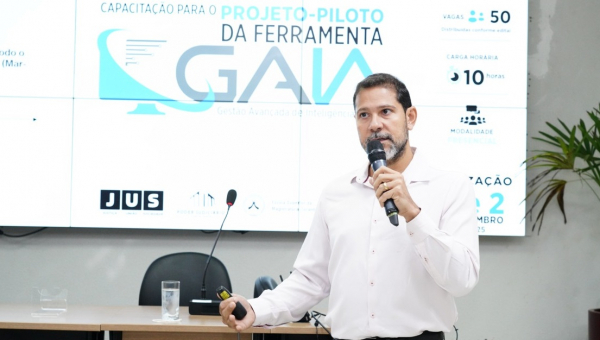
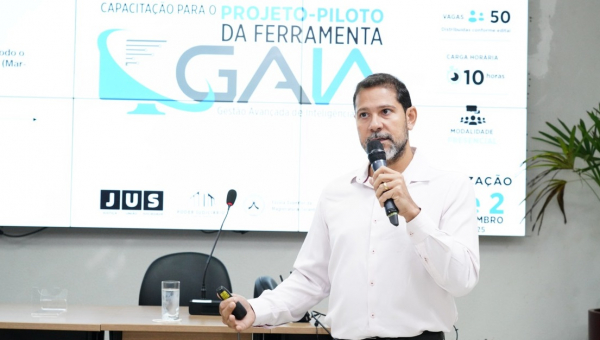
The server Angelo Stacciarini Seraphin, analyst of the Directorate of Information Technology of the TJTO and doctoral student in Judicial Provision and Human Rights (Esmat/ UFT), conducted the first part of the training with the presentation of the GAIA Assistant and GAIA Draft tools. The moment addressed practical aspects of integration with Eproc, from operational commands to examples of use in the procedural flow.
In the morning WORKSHOP, guests from the TJRS, Justice Clóvis Mattana Ramos and advisor Gabriel Milnitz Leite, shared the experience of the Judiciary of the state of Rio Grande do Sul with the use of Artificial Intelligence.
“We have a road without return. The idea here is to share what is good, what we should observe, where we need to be careful. The practice in the use of the tool makes all the difference", pointed out Justice Clóvis.

"Since we implemented GAIA in the TJRS, we have had exponential results. The tool helps us both in quantity and quality, always with the jurisdiction as focus", added Gabriel.
The course is anchored in the Resolution 615 of the National Council of Justice (CNJ), of 2025, which regulates the use of Artificial Intelligence in the Justice System. Held by the TJTO, through Esmat, under the coordination of the president of the Court, Justice Maysa Vendramini Rosal, the training continues until Tuesday (Dec 2nd).
Among the participants of the training were present, in addition to the vice president of the TJTO and the general director of Esmat, the Justices Etelvina Maria Sampaio Felipe and Adolfo Amaro Mendes, as well as the magistrates Arióstenis Guimarães, Gil Correia, Marcelo Faccione, Rodrigo Silva Perez, Roniclay Alves and Wellington Magalhães.
Tributes
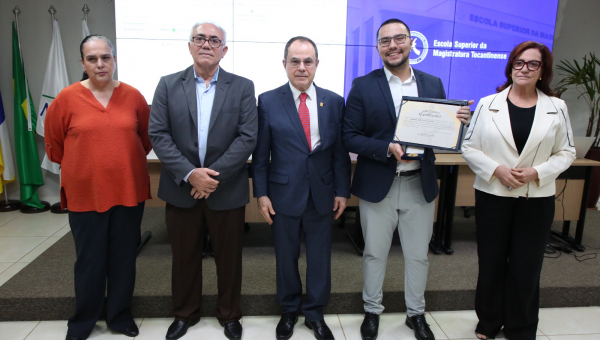
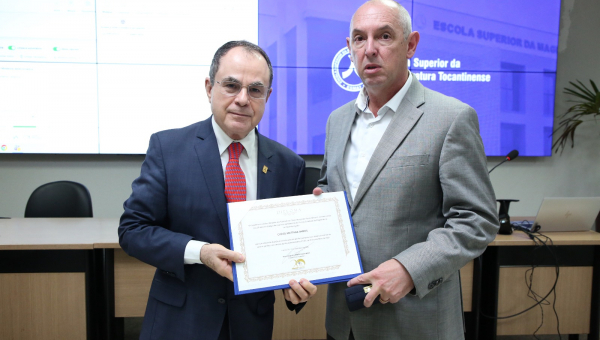
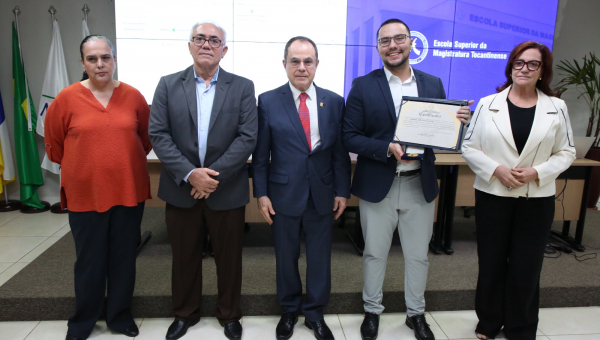
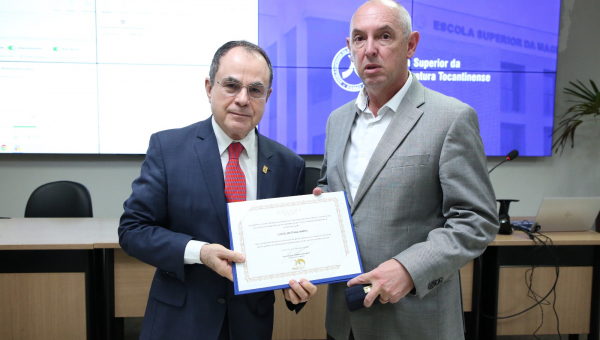
At the end of the morning activities, Justice Marco Villas Boas held the delivery of the Copedem 20 Years Medallion, intended for personalities with relevant contribution to legal training in the country. Jacqueline Adorno and Clóvis Mattana Ramos received the honor. The assessor Gabriel Milnitz and the server Angelo Stacciarini were awarded with the Esmat Medallion, in recognition of their achievements in the dissemination of technical knowledge and good practices in the Judiciary.
_thumbnail_thumbnail.jpeg)
_thumbnail_thumbnail.jpeg)
_thumbnail_thumbnail.jpeg)
_thumbnail_thumbnail.jpeg)
_thumbnail.jpeg)
_thumbnail.jpeg)
_thumbnail.jpeg)
_thumbnail.jpeg)
