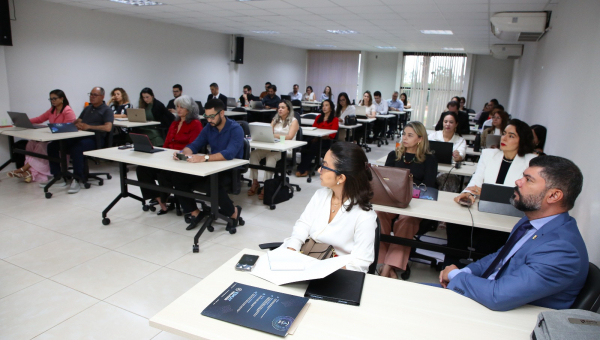
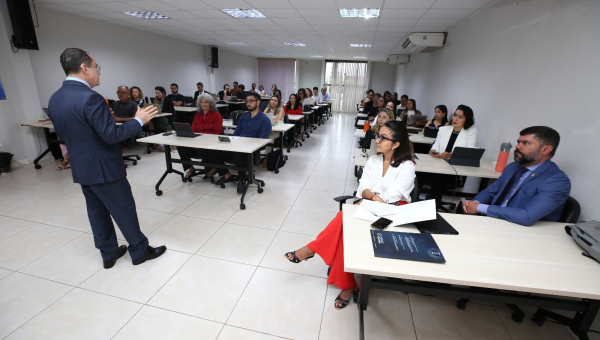
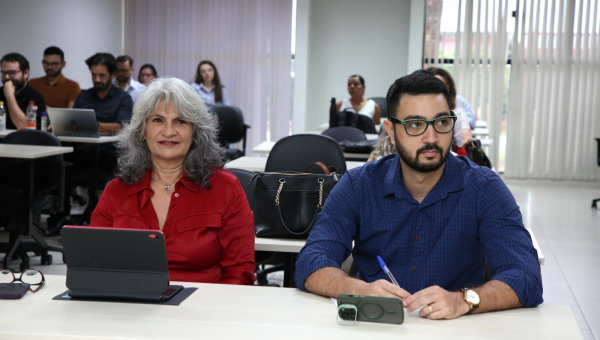
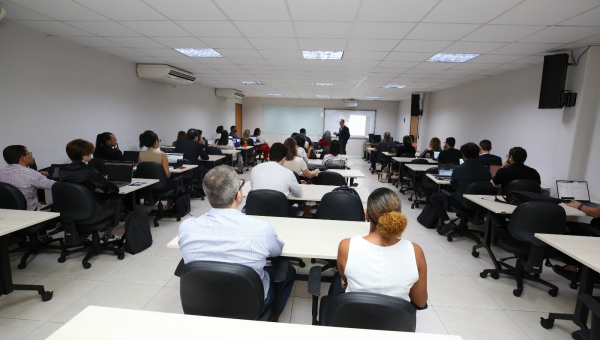
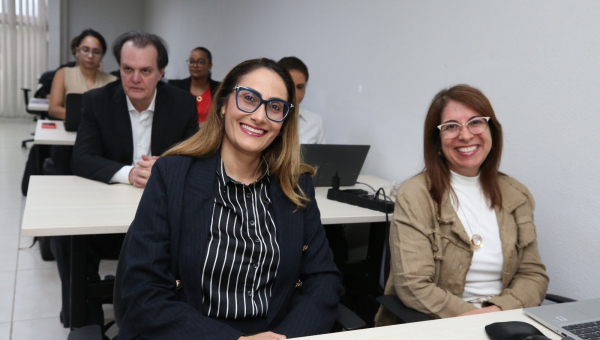
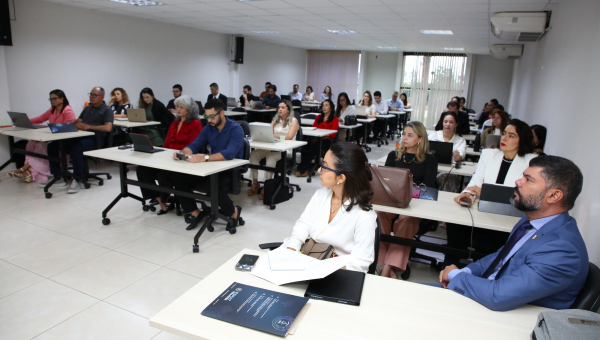
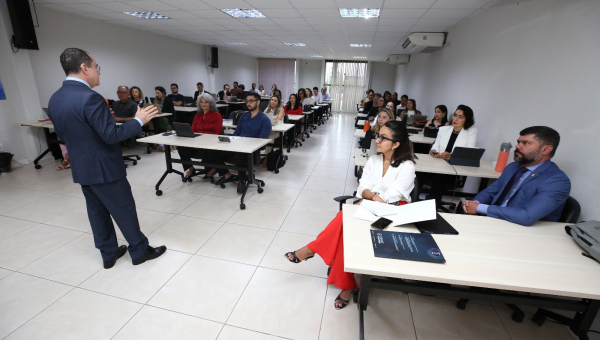
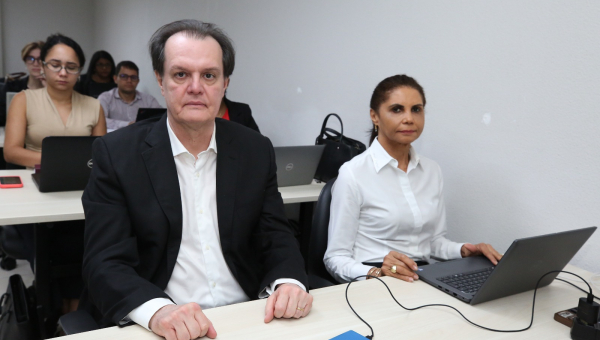
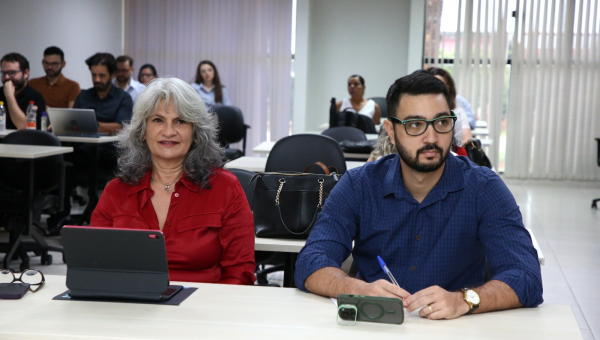
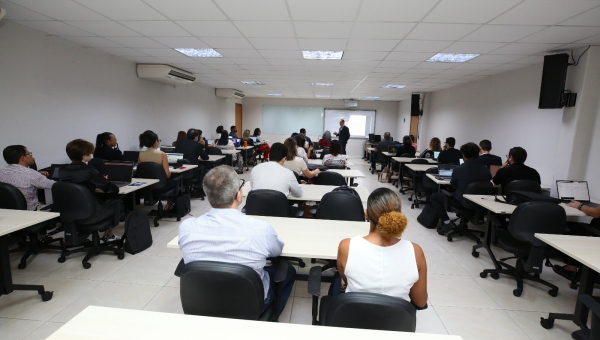
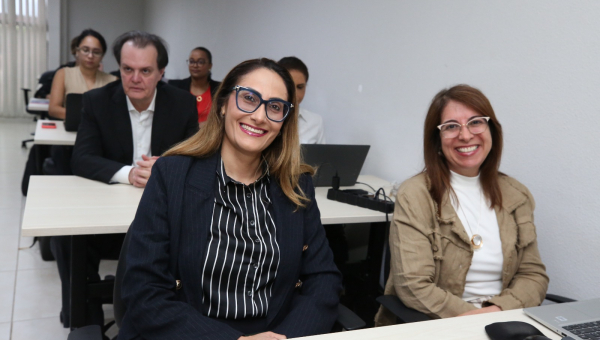
The Superior School of the Judges of the State of Tocantins (Esmat) started, on Monday (Feb 23rd), the fifth class of the Training of Trainers (FOFO). The opening was the starting of Level I (Teacher Base Training), with the first module addressing the topic on "Innovation and Technology in the Training of Magistrates: use of Artificial Intelligence (AI) in educational practice".
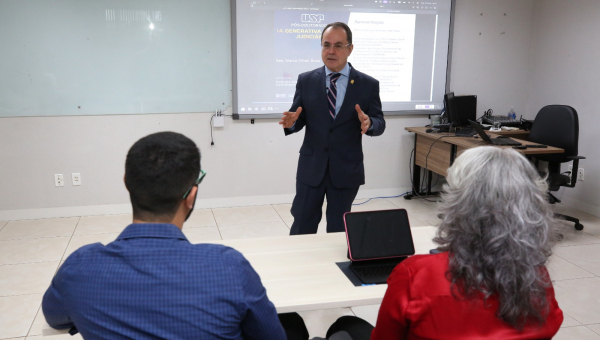
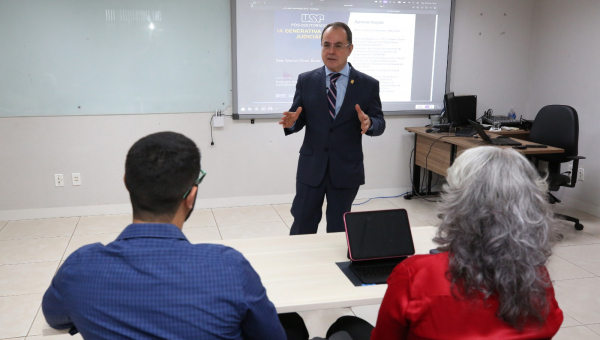
The in-person activities of this stage take place, until this Wednesday (25th), in morning and afternoon shifts, with the guidance of the Doctor Professor Marco Anthony Steveson Villas Boas, general director of Esmat and president of the Permanent College of Directors of State School of the Magistracy (Copedem).
At the opening of the class, judge Wellington Magalhães, a member of the 2nd Deputy Board (Council of Courses of the School), took the opportunity to highlight the formative sense that goes beyond the classroom space.

“The course is not just for the classroom, it’s a course for life too", he said, welcoming participants and contextualizing the proposal of the fifth edition.
This Tuesday (Feb 24th), the second day of activities, magistrates and civil servers follow a programming aimed at developing teaching skills and training of multipliers.
When dealing with the role of those who teach in the Judiciary, the justice emphasized that the training seeks to prepare professionals capable of replicating knowledge in their units, strengthening a network of trainers.
“[It is necessary] to empower those people who will empower other people," he noted, by relating teaching to the responsibility of disseminating methods and good practices.

In addition to discussing the impact of artificial intelligence in education and the world of work, the director of the School has prioritized the inverse classroom methodology and practical exercises in the development of activities.
In the content, the justice has worked, in an applied way, on what Generative AI tools can deliver and which limits require attention, such as the need to confer information, recognize biases and preserve data security.
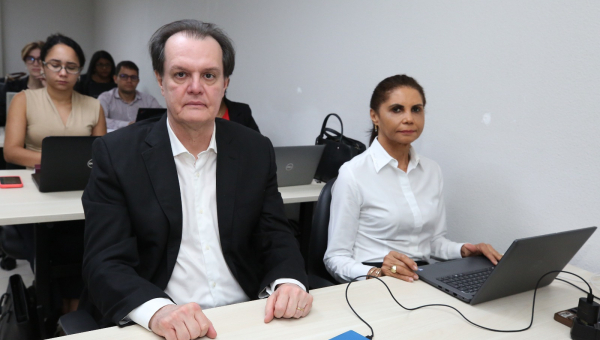
Among the participants, the Accountant (TJTO) Marcelo Farias assessed that, even at the beginning, the course already points out concrete effects in the institutional routine.
“I see in this course an opportunity not only to improve knowledge, but also to develop the ability to multiply it", he said, mentioning the expectation of applying the learnings in the workplace.
Maria da Vitória Costa e Silva, civil server of the Electoral Justice, commented on the challenge of integrating innovation and criticality in the performance of law operators and educators. For her, the training has provoked reflections on the need to "[us] reinvent ourselves as subjects" in the face of complex problems in the world today, and on how generative tools can support more active learning, without replacing human control.
“Ethics, regulation and control must be the essential foundations,” she said.
The course is offered in the semi-presential mode and it follows until June 24th, with a total workload of 128 hours. The next module will address the topic on "Didactic Elements for Planning and Teaching Practice in the context of the magistracy using distance learning", with web classes on March 11th, 13th, 18th, 20th, 25th and 27th, and April 7th, 8th, 9th, 14th, 15th and 16th, taught by the teachers Ritze Pereira Ferraz da Costa and Rita de Cassia Bella Bartok Marques Arantes.