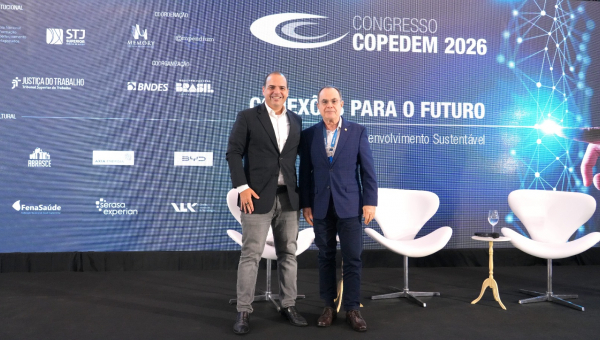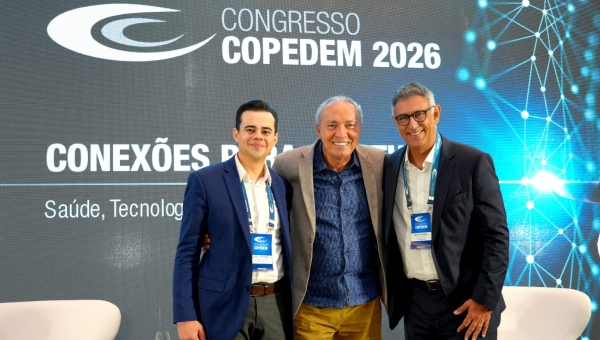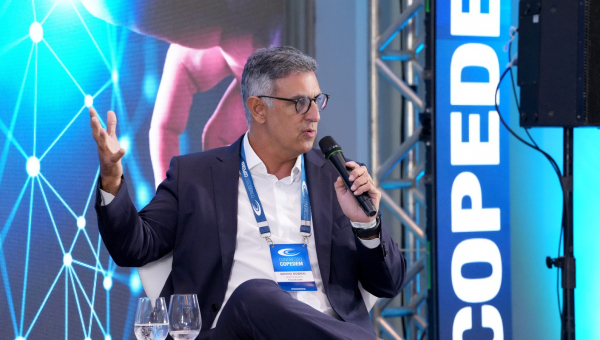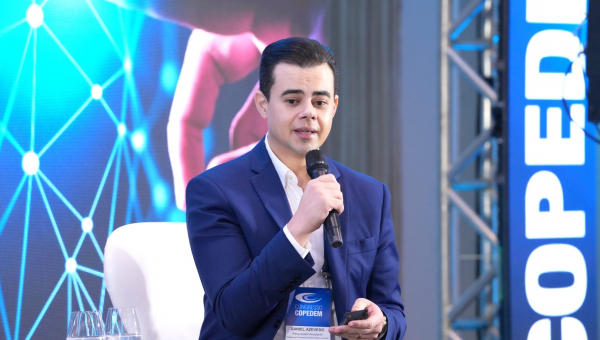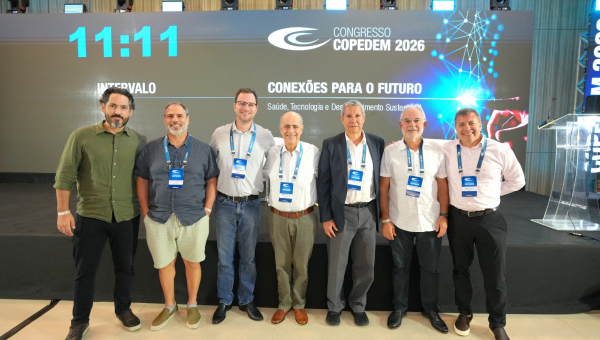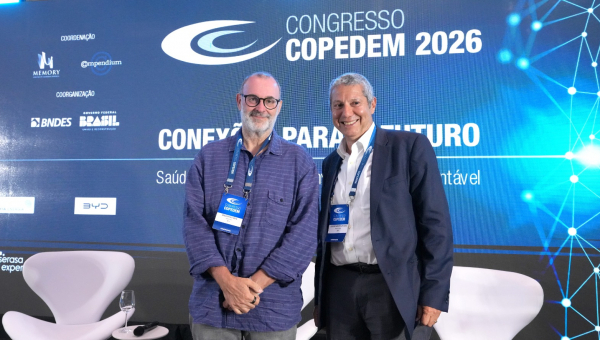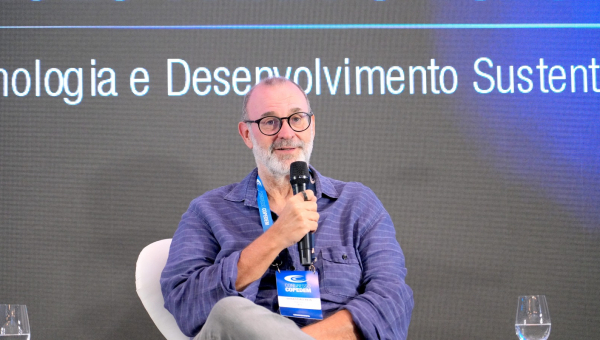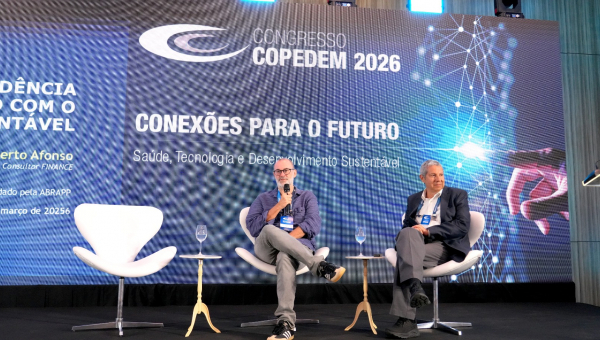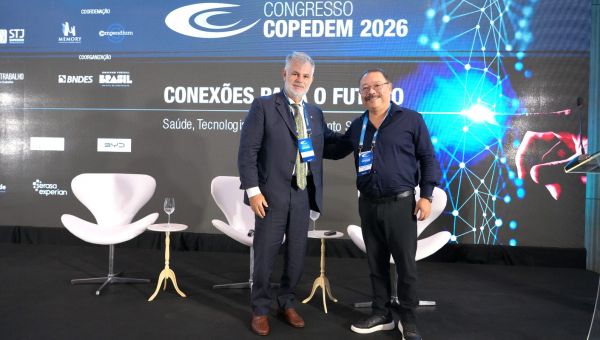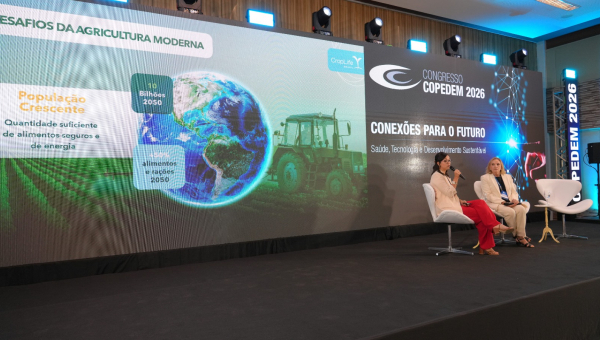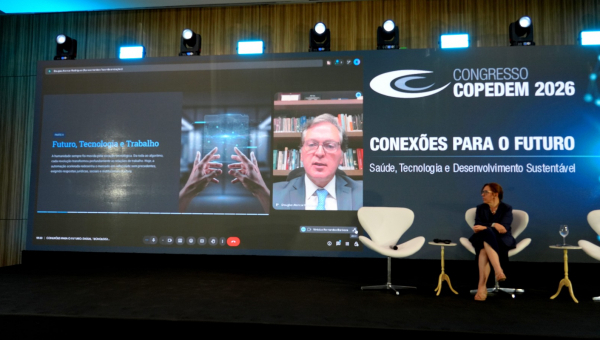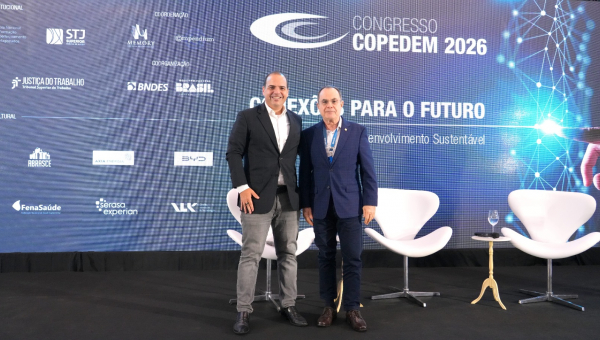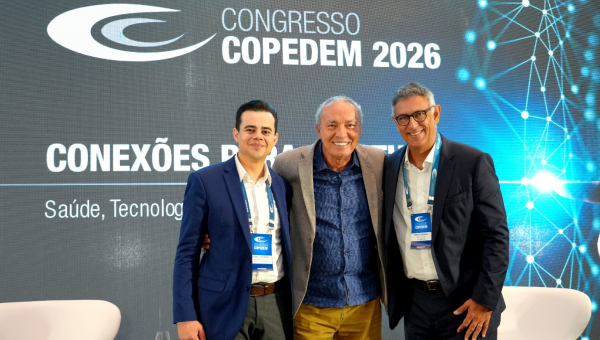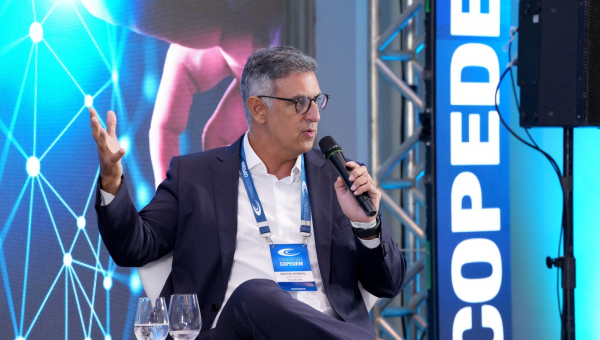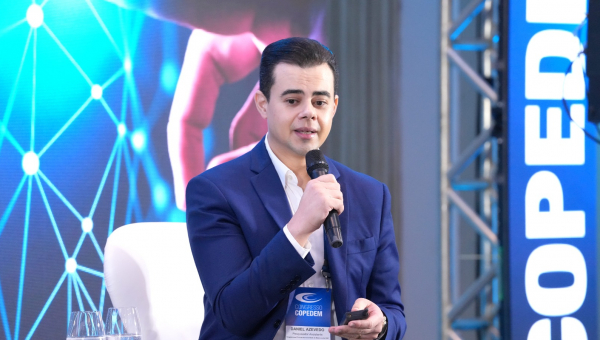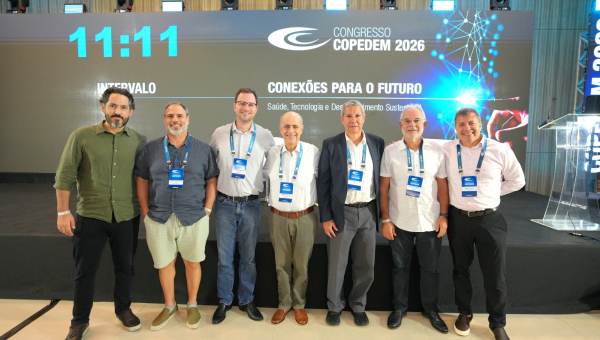
The second day of the Copedem Congress of 2026, held this Friday (March 27th), in the city of Praia do Forte, state of Bahia, deepened the debate on the impacts of technological, climate, economic and social transformations in the Justice System and public life. Throughout the programming, magistrates, lawyers and experts defended greater approximation between the Judiciary and other sectors of society, as well as continuous training to deal with highly complex topics such as artificial intelligence, social security, sustainability, evidence-based health and innovation in agribusiness.
In testimony, the president of the Permanent College of Directors of State Schools of the Magistracy (Copedem) and general director of the Superior School of the Judges of the State of Tocantins (Esmat), Justice Marco Villas Boas, mentioned the effects of climate disorder and the strategic importance of the Amazon for the environmental, economic and agricultural stability of the country, he defended a Judiciary more attentive to the concrete functioning of society.
“All these factors need to be analyzed and connected, they cannot be seen in isolation and they need to be contextualized", he said.
AI Governance opens up to the programming
The first panel of the afternoon dealt with artificial intelligence governance, with an exhibition by Rony Vainzof, partner at VLK Lawyers. In the speech, the expert highlighted that the advancement of technology requires permanent updating of professionals and institutions.
"We have a continuous evolution, here remains the ability of people to always be re qualifying and being able to follow this evolution," he said. For him, it is not enough to use technology; you must understand it critically.
“Understand technology in order to be able to challenge this technology" has become, according to him, part of the literacy needed in this new scenario.
Sustainability in shopping malls and regulatory challenges
Subsequently, the Congress dealt with shopping malls and sustainability, with participation of Gisele Pimentel, legal director of Abrasce (Brazilian Association of Shopping Malls), and José Ricardo Pereira Lira, from the Lobo & Lira Lawyers firm. The approach presented to the public showed that sustainability of the sector does not summarize to good business practices, but it involves constitutional issues, division of competences and legal certainty.
The materials brought to the event dealt with topics such as reverse logistics, National Policy of Solid Waste, ecological federalism and the role of shopping malls as urban equipment with direct impact on the artificial environment and the organization of cities.

The content also showed that the sector has been structuring an ESG, governance and social impact agenda, while facing interpretive and regulatory disputes which legal solution is seen as decisive for the evolution of sustainability in the segment.
Law of transfer and payment arrangements
Another addressed topic was the Repasse Law, in a lecture by Marcelo Takeyama, legal director, self-regulation and compliance of Abecs (Brazilian Association of Companies of Credit Card and Services). The exhibition addressed the importance of the institute for the preservation of technology, innovation and hygiene of card arrangements, in a sector with a strong impact on household consumption and on the payment infrastructure in the country.

Social security, work and future
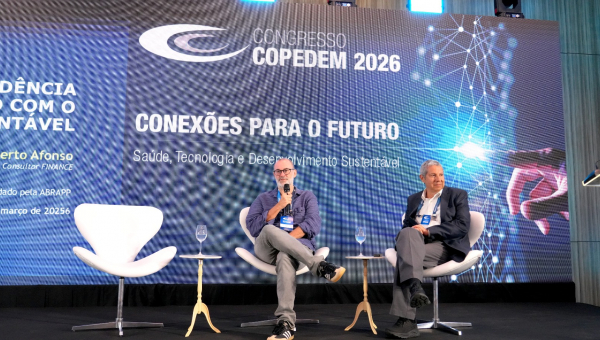
In the panel on the future of social security and its relationship with sustainable development, Professor José Roberto Afonso drew attention to a key change: "the past will no longer be a reference for the future." An economist in the midst of a mostly legal auditorium, he organized his presentation around three points: Social Security, the new directions of the system and the connections needed to face what is ahead.
The presentation reinforced this diagnosis by highlighting the pressure of demographic transition, the loss of a more solid contribution base for social security, the growth of work without formal protection and the effects of the tax reform on new forms of social security coverage.
Health and applied science with a focus on evidence
In the part of the program dedicated to health, Justice Manoel de Sousa Dourado chaired the panel on Health and Applied Science, with moderation by Bruno Sbardel de Carvalho, executive director of FenaSaúde (FenaHealth), and lecture by Neurologist Daniel Azevedo on ASD (Autism Spectrum Disorder) and evidence-based practices. The presentation was aimed directly at the qualification of the judicial decision and it started from the premise that "right to health is not a right to any method".
Among the central points, the speaker maintained that lauds do not replace critical examination of scientific robustness, that more hours of therapy do not automatically mean better care and that the qualified jurisdiction must protect the child from both omission and overtreatment without basis.

Technology and effectiveness of the labor jurisdiction
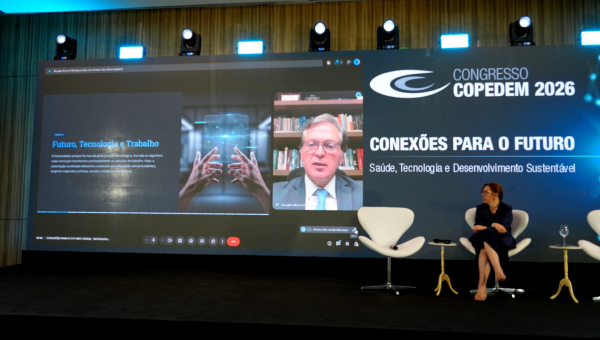
The programming also included a lecture by minister Douglas Alencar Rodrigues, of the Superior Labor Court (TST), on "Future, technology and effectiveness of the labor jurisdiction: a view from the jurisprudence of the TST". The theme broadened the central axis of the congress by bringing together technological transformation, judicial effectiveness and new dynamics of the world of work.
Sustainability under pressure and the role of the Judiciary
In the following panel, Walter Baére Filho, legal director of BNDES (National Bank for Economic and Social Development), dealt with sustainability and development under the impact of a more unstable international scenario. In his speech, he noted that "development has taken on new contours" and that "we can no longer talk about the same sustainability as a year ago", by linking the environmental agenda to geopolitical instability, the increase in international conflicts and the weakening of the multilateral consensus.

Legal certainty and innovation in agribusiness
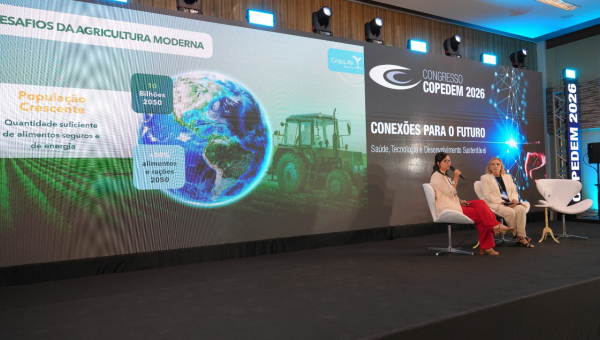
Closing the technical programming of the day, the Congress addressed the relationship among legal security, innovation in agribusiness and intellectual property, under the presidency of Juliana Campos Horta. In the lecture, the expert Maria Luiza Barros da Silveira, from CropLife Brazil, highlighted the economic, technical and human weight of innovation in the sector.
"It’s a lot of time, it’s a lot of money and effort," she said, recalling that the development of new products mobilizes researchers, engineers, chemists, agronomists and lawyers. According to her, a new chemical defense could cost more than $300 million and take years to reach the market after testing for human and environmental safety.
At the end of the programming, the predominant tone was that judicial training needs to accompany a fastly changing country and world.
In a testimony collected during the event, Justice Lídio Modesto da Silva Filho (TJMG) summarized this perception by stating that the meetings promoted by Copedem are "always very relevant for the enhancement of knowledge and preparation on the side of the Brazilian magistracy”.