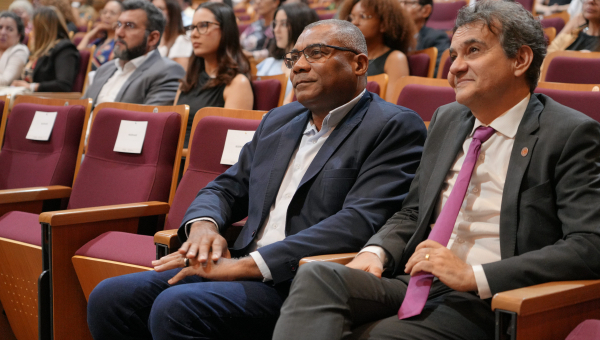
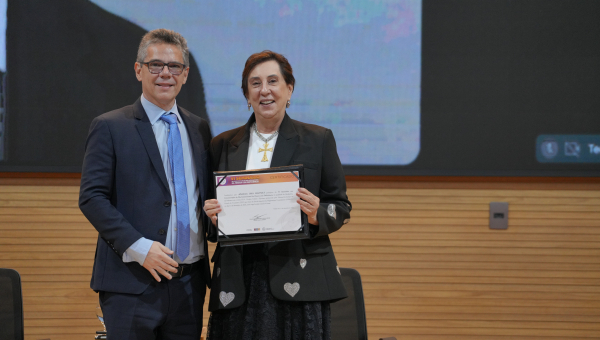
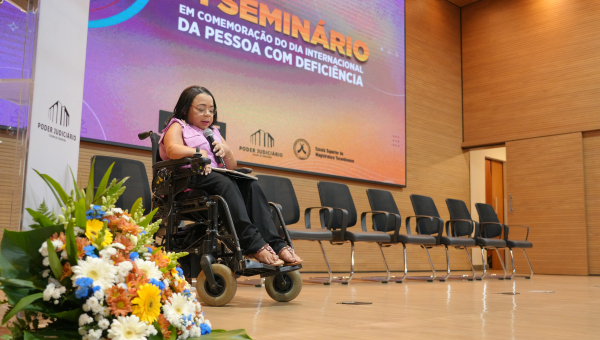
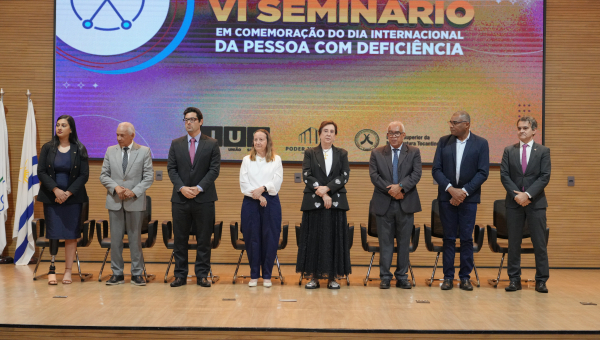
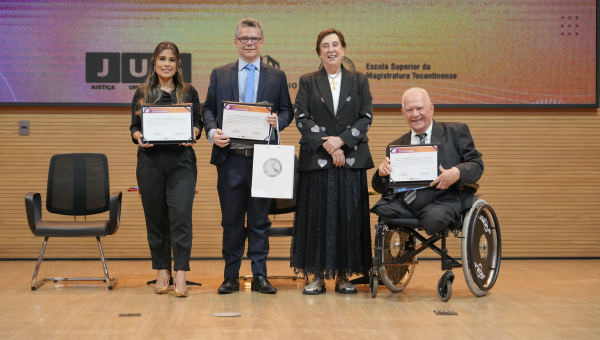
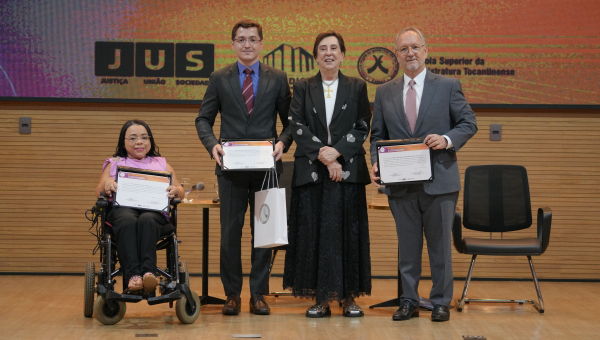
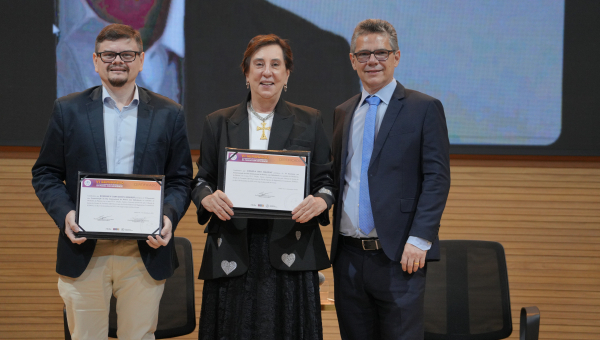
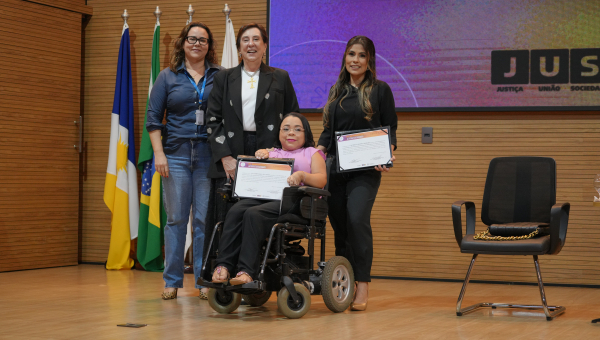
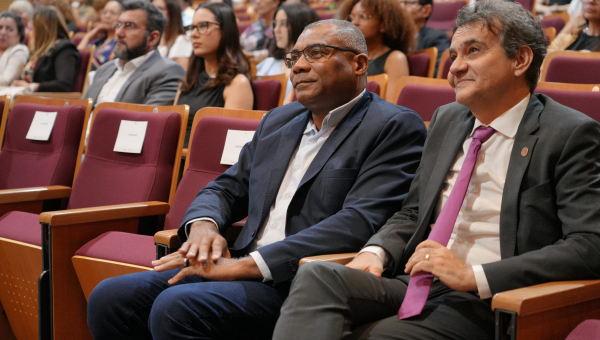
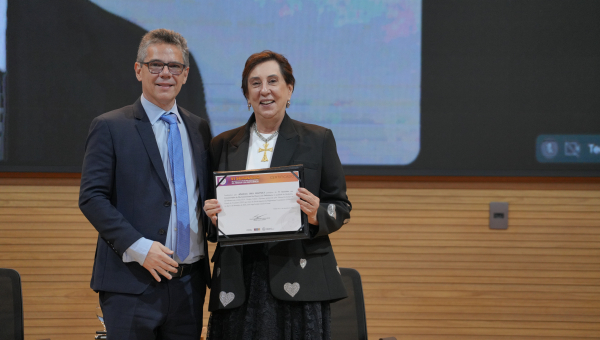
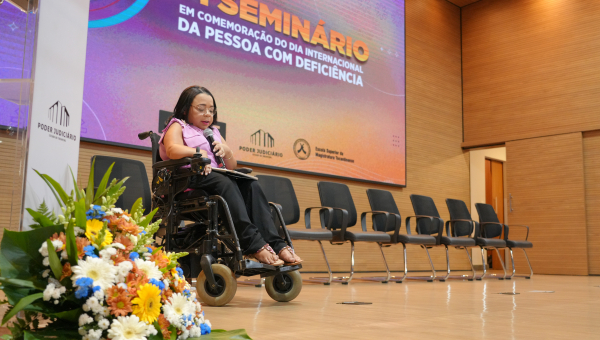
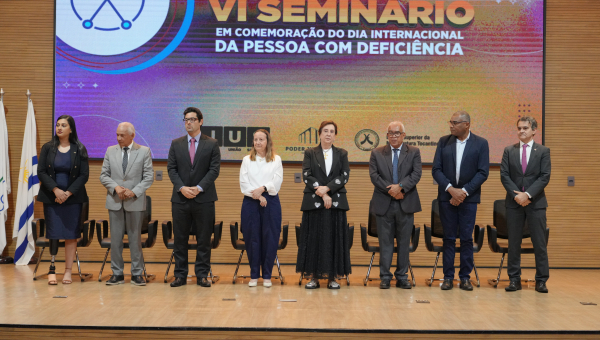
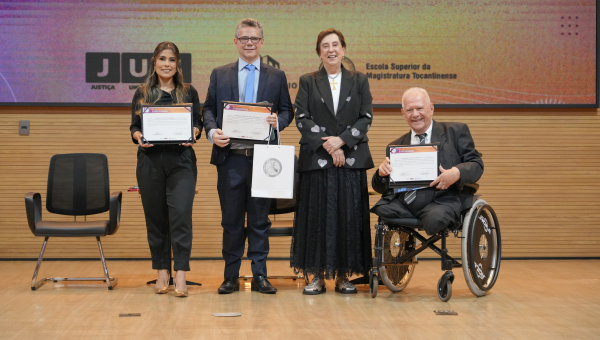
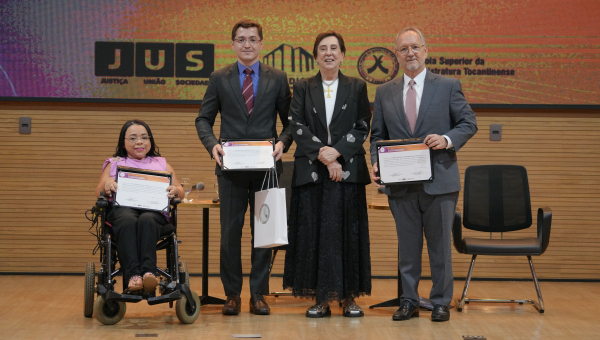
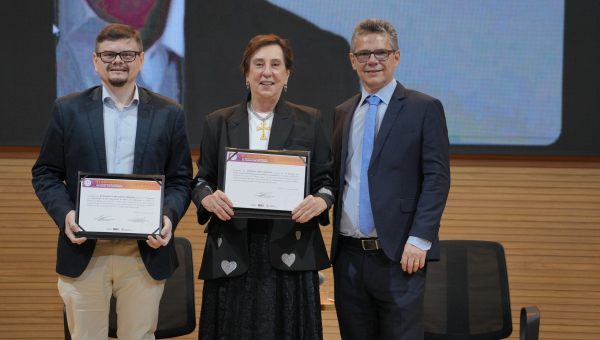
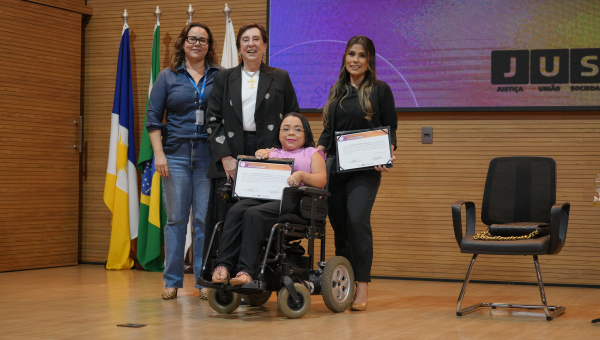
Closing the year of 2025 with a powerful and necessary reflection, the Court of Justice of the State of Tocantins (TJTO), through the Superior School of the Judges of the State of Tocantins (Esmat) and the Permanent Commission for Accessibility and Inclusion, promoted on Thursday afternoon (Dec 11th), the last event of its annual programming: the VI Seminar in Commemoration of the International Day of People with Disabilities. With more than five hundred registered participants, the seminar brought together experts, magistrates, health professionals, students and civil servers to discuss, in depth and sensitivity, the challenges of inclusion in the Justice System.
Inclusion as an institutional value
During the opening of the seminar, the president of the Commission on Accessibility of the TJTO, Justice Ângela Issa Haonat, highlighted the commitment of the Court to the effectiveness of fundamental rights and the application of the biopsychosocial model of disability.
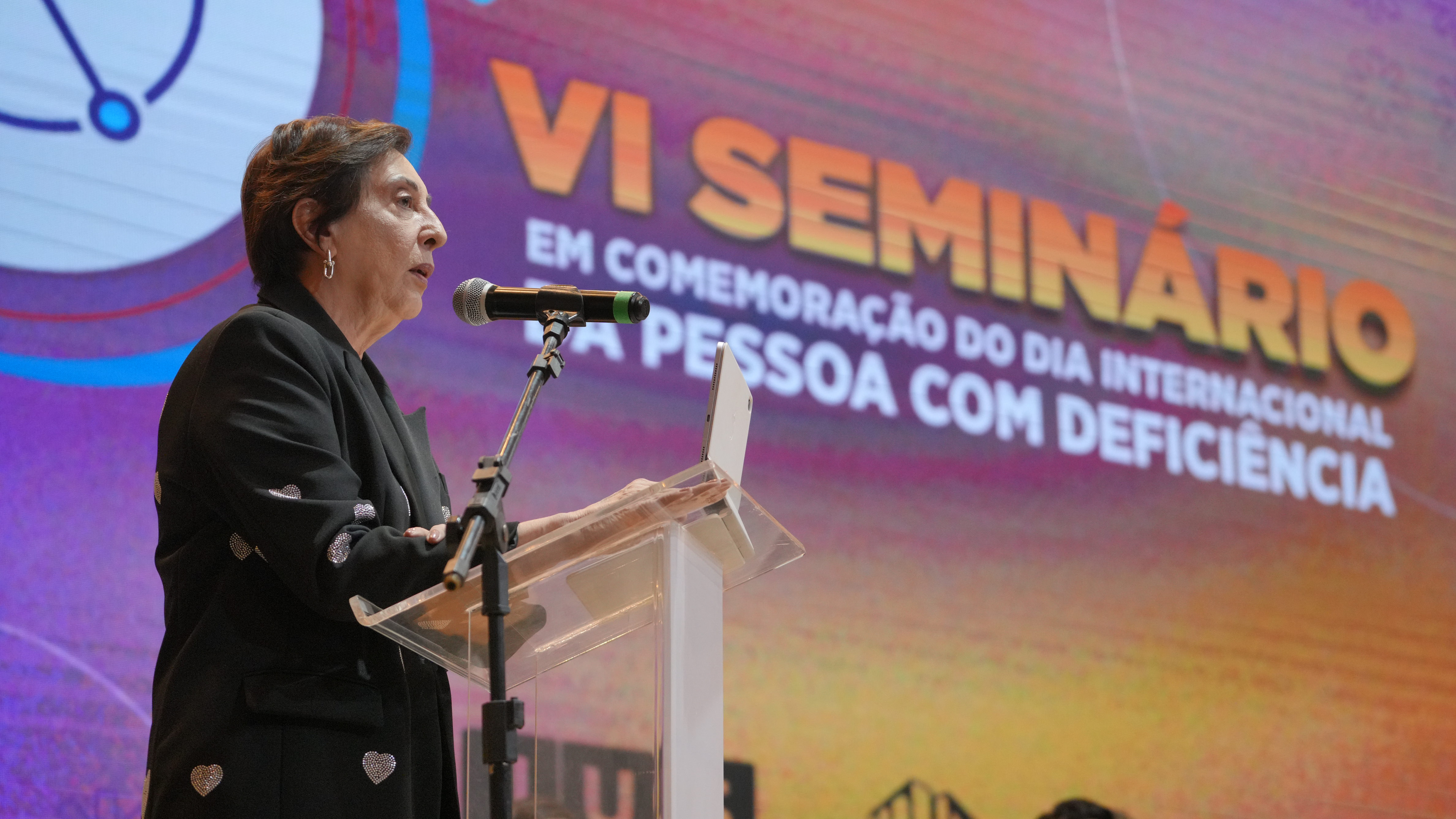
“Accessibility should be treated as a transversal axis of judicial activity, ranging from the adaptation of physical spaces and communication systems to the qualification of decision-making acts and the continuous training of magistrates and civil servers, she said.
The president of the TJTO, Justice Maysa Vendramini, also stressed the importance of the initiative. For the magistrate, the seminar represents not only a space of reflection but also a stimulus to concrete transformations in the institutional and social environment.
“Inclusion should not be just a normative guideline. It should also be a daily practice, in the way we organize our spaces, processes, services and, above all, human relationships", she said.
Judicialization of the theme and biopsychosocial model
In the first lecture of the event, Judge Adriano Gomes de Melo, who works in the area of Childhood and Youth and has personal experience with the theme, made a strong warning about the conduct of legal proceedings involving people with the Autism Spectrum Disorder (ASD). According to the magistrate, the exclusive use of medical reports to support judicial decisions on specific therapies, such as the ABA method, ignores what is established by the International Convention on the Rights of People with Disabilities, which has constitutional status in Brazil.

"The medical document alone cannot define the treatment of disability. This violates the Constitution and compromises the very contemporary concept of disability, which must be understood from the biopsychosocial model, considering environmental, social and psychological factors, not only biomedical", explained the judge, reinforcing the need for interdisciplinary assessments and respectful of the current legislation.
The speech was contextualized by Patrícia Rodrigues, who serves on the Commission on Accessibility and mediated the lecture. According to her, the lack of consensus on the applicable instruments led the TJTO at that time to suspend the adoption of biopsychosocial assessment.
“But it is essential to resume this debate, because the biopsychosocial evaluation will reduce the invisibilities and give the right to who is of right", she pointed out.
Research, data and the challenge of effectiveness
Following the seminar, Professor and researcher Wainesten Camargo da Silva presented a national and international panorama on autism and scientific production in the area. Wainesten criticized the lack of data in Brazil and the distance between science and institutional decisions.
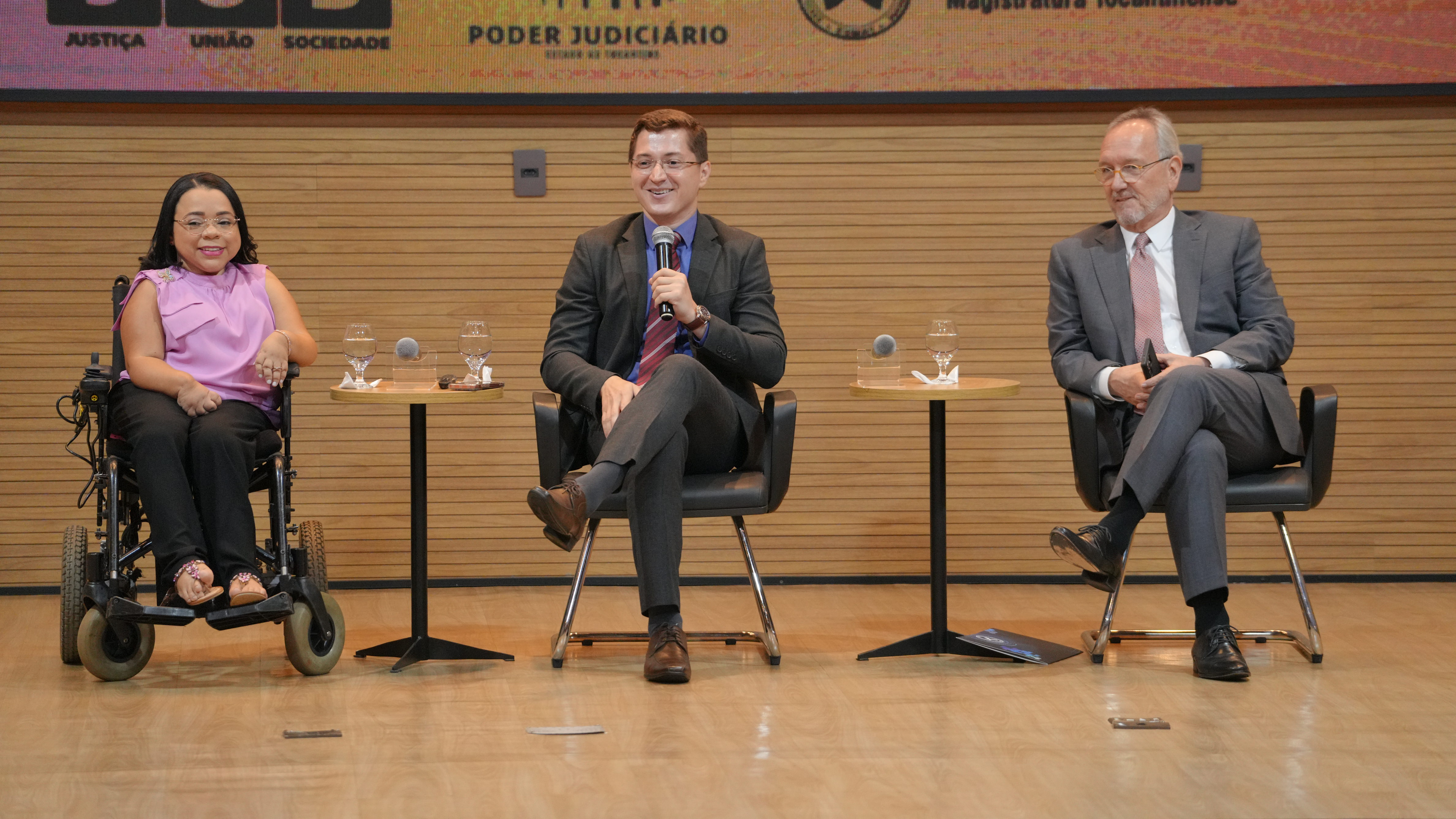
"Science evolves all the time, but in Brazil we are still displaced from the world. We have not produced science that has an impact on autism, nor have we been able to systematize basic data," he said. According to him, a study conducted with Unitins students (as) revealed that about 48% of lawsuits related to TEA in the TJTO involve disputes about ABA therapy - given that it could guide more structural solutions.
“If we could pacify the understanding about the method, based on scientific evidence, almost half of the disputes would be resolved. But for this it is necessary to invest in data, research and technical qualification.
Technology as an ally of inclusion
At the end of the seminar, Neuroscientist Leandro Matos presented an applied perspective on the use of technologies to increase the reach and quality of care for people with ASD. For him, the challenges of inclusion are not restricted to the person with ASD. "The family also suffers. It is common to find mothers with compromised mental health, absent fathers and a constant feeling of exhaustion. Pain is not only clinical, it is emotional, structural and social," he pointed out.

Leandro also highlighted the impacts of exclusion in multiple environments: school, bonds of friendship and the world of work. According to the lecturer, the difficulty of socialization common to many autistic people needs to be understood with empathy and not as an absolute limitation. In the assessment of the neuroscientist, promoting inclusion should not only be a legal duty but also an institutional and social transformation strategy.
“With information, training and structured action, we can stop making inclusion only by force of law and start doing it by force of necessity. Companies and institutions will realize that diversity generates results, when allocated with purpose", he pointed out.
The lectures were mediated by Judge Emeritus Adhemar Chúfalo Filho and the civil server Patrícia Idehara in the first lecture; by the chief justice, Justice Pedro Nelson de Miranda Coutinho, and by the civil server Eva Portugal in the second; and, at the closing, by Ângela Issa Haonat, accompanied by the psychiatrist and coordinator of the Psychosocial Reception and Monitoring Center of the TJTO, Wordney Carvalho Camarço.