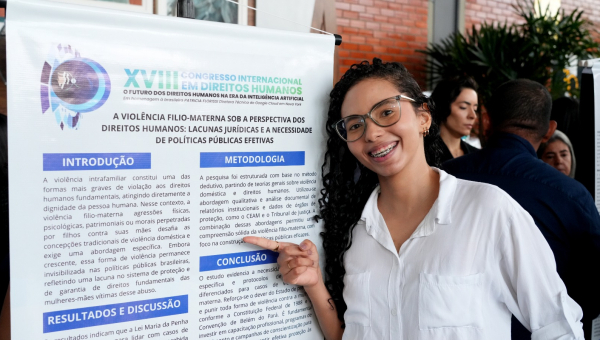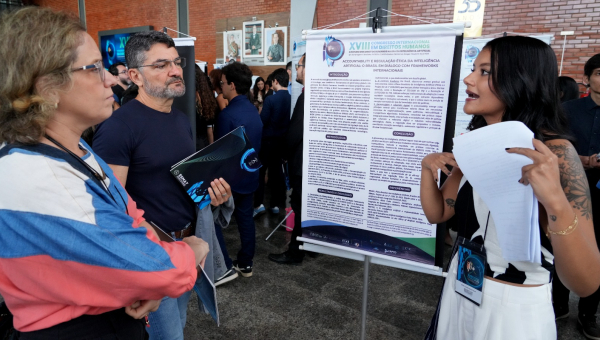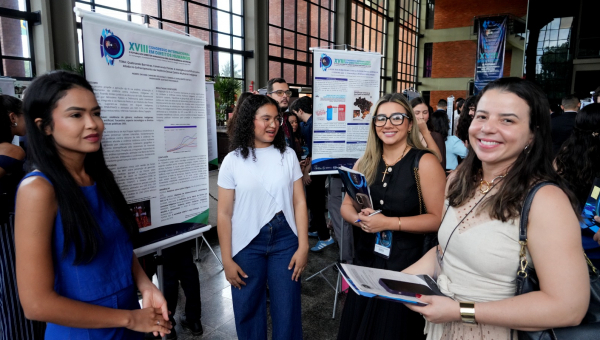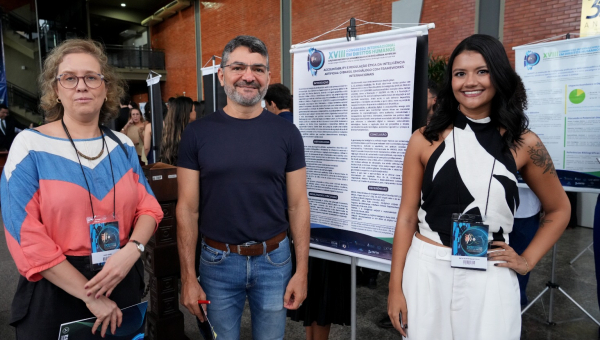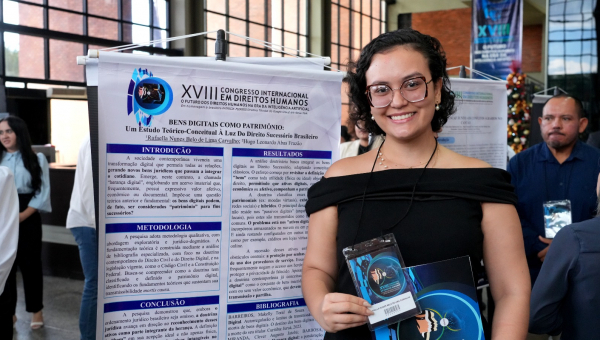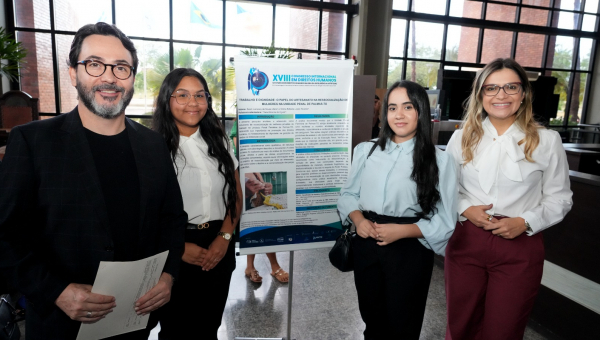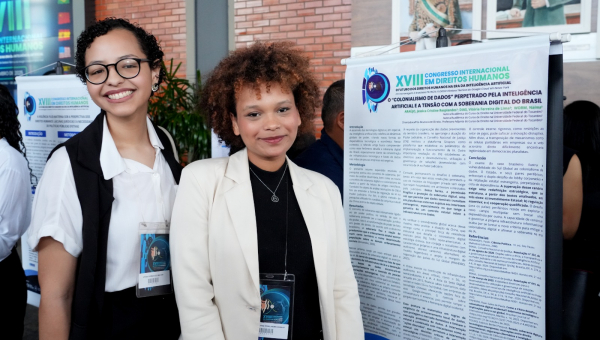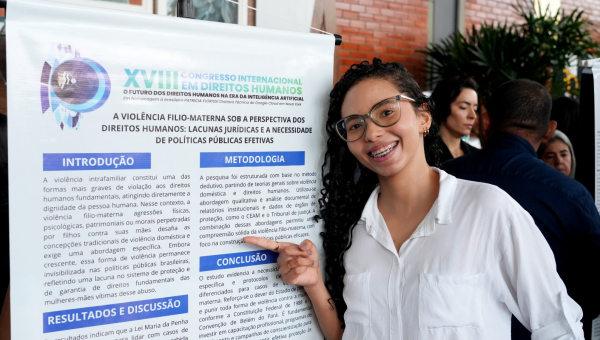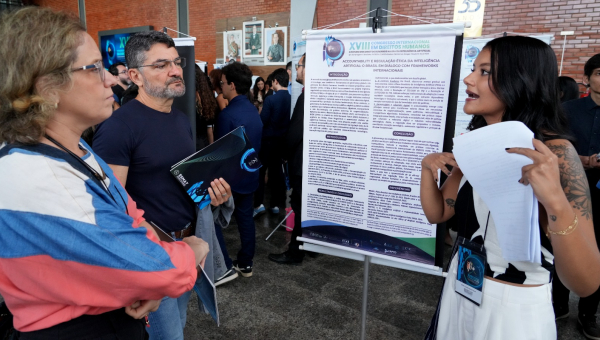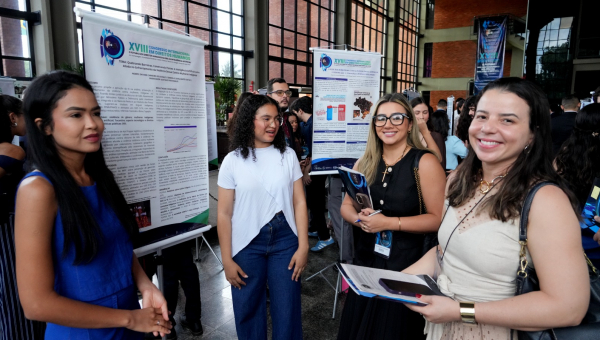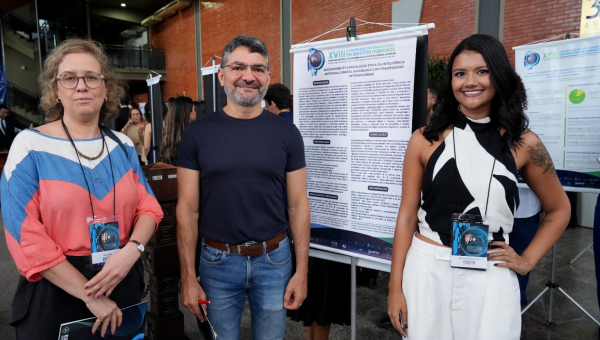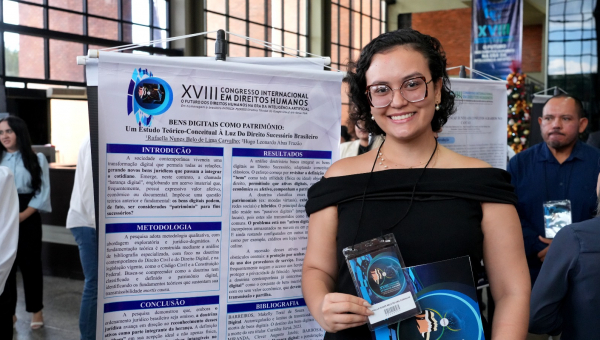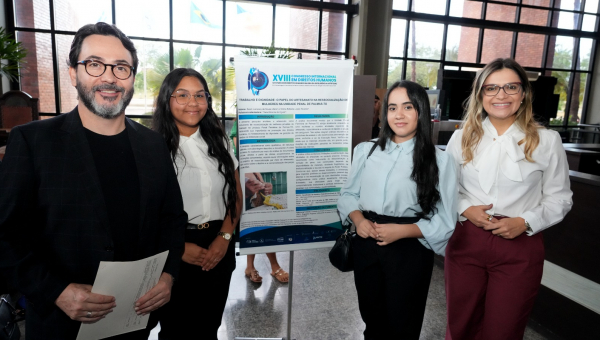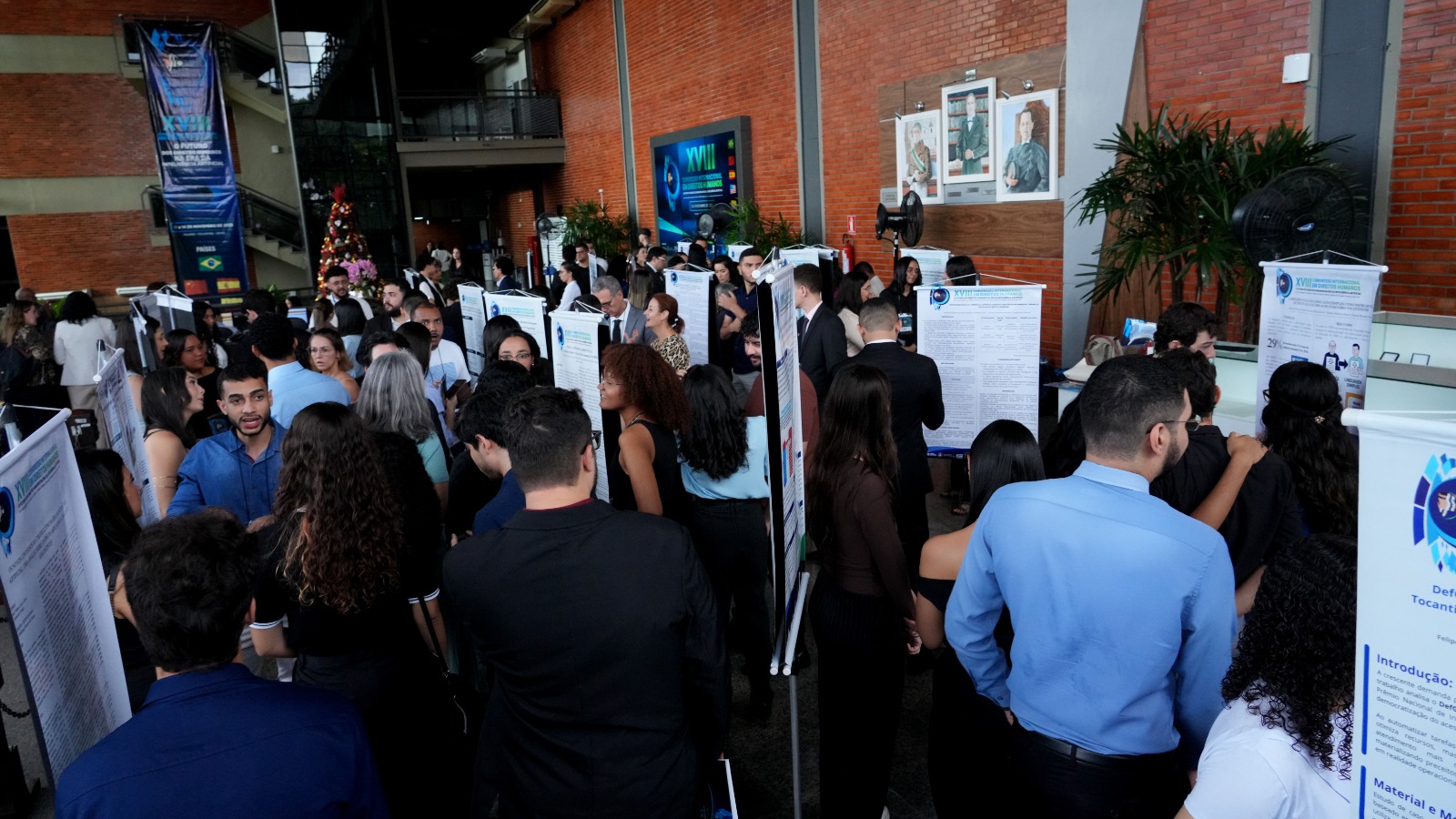
The Entrance Hall of the Court of Justice of the State of Tocantins (TJTO) turned, on Thursday (November 13th), into a pulsating corridor of science and academic production. From 9 am to 5 pm, almost 90 undergraduate and graduate studies of various universities were presented in panel format, within the programming of the XVIII International Congress on Human Rights, which follows until this Friday (November 14th).
The space, busy since the early hours of the morning, received more than 44 surveys in the first shift alone. They are all interdisciplinary papers and aligned to themes that touch on Human Rights, Technology, Justice, Social Vulnerabilities, Public Policies and Citizenship.
According to the coordinator of the activity, Professor Gustavo Pascoal (Post-Graduation Program in Judicial Provision and Human Rights (UFT/ ESMAT)), the presentation takes place every year, but 2025 brings a novelty, which is the opening of an exclusive category for graduate students. "Adding graduation and post, we reached about 90 works. In the morning, there are 45 presentations and we will have another 45 in the afternoon, with different researches", he explained.
For many students, this marks the first contact with an International Congress; for others, it represents the opportunity to consolidate emerging issues and dialogue with different areas of knowledge.
Ethics, Technology and Justice
Among the papers in the exhibition is that by Paulo Everton Silva Lima, a civil server of the Judiciary of the state of Tocantins and and master’s student at UFT/ESMAT, who presented his research entitled on “The Ethical Governance of Artificial Intelligence in the Judiciary: analysis of the Article 10 of the Resolution No. 615 of the CNJ.” He explains that the Resolution, published in September of 2025, was created to establish clear parameters for the use of AI in the Judiciary in a national scenario that still lacks specific legislation.
According to Paulo, the CNJ reinforces that no Artificial Intelligence can replace human analysis in sensitive areas. “We deal with people. The concern is that AI should not be used to delegate judgments or subjective analyses. The categorical imperative reminds us that human beings are the end, not the means. The Resolution is current, and the discussion is very much in vogue,” he says.
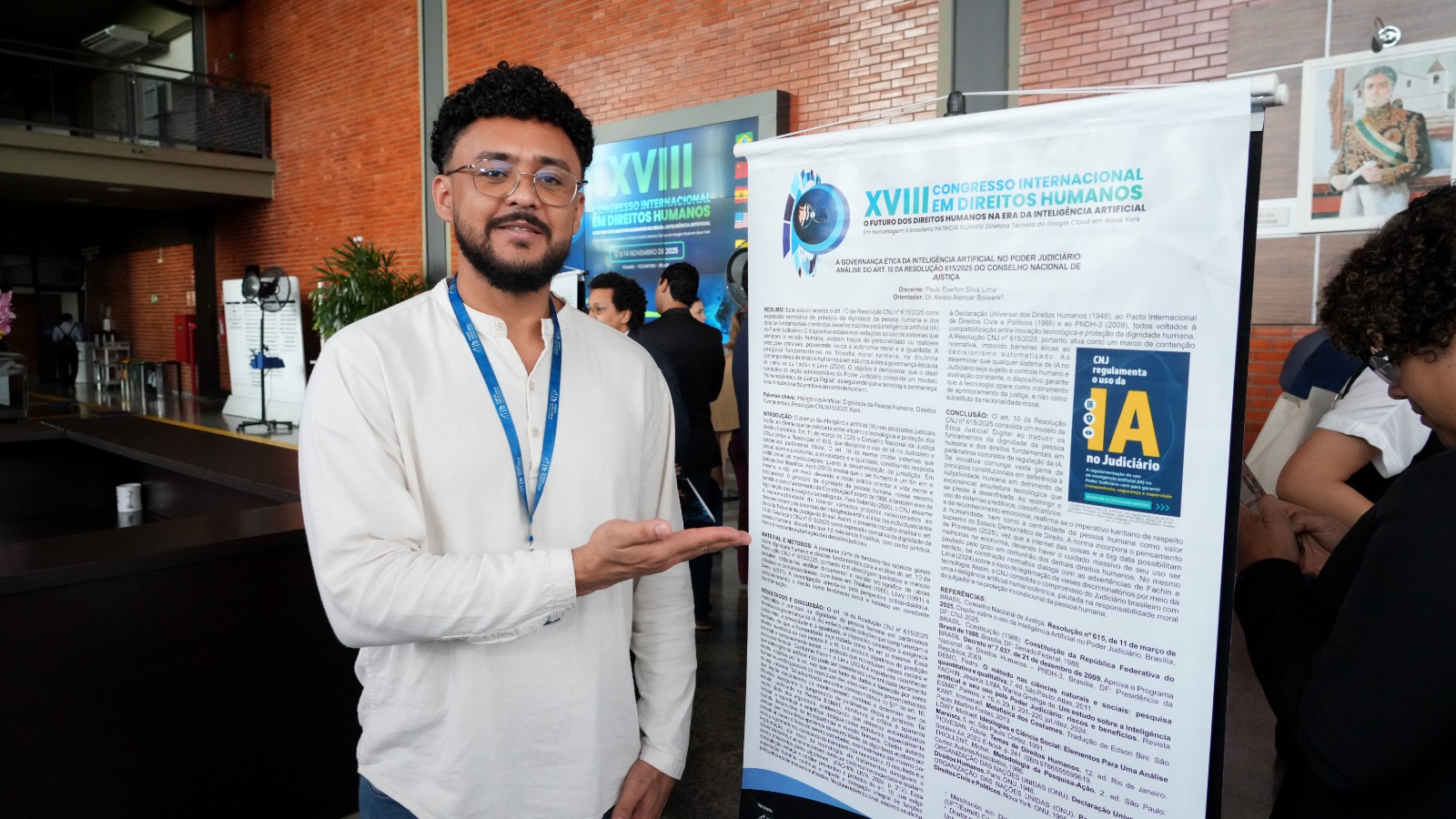
“It is enriching to bring up such a current topic and realize how this debate permeates the daily life of the Judiciary and human rights. After COVID-19, I think nothing affects the whole world as much as Artificial Intelligence.”
Facial recognition And human rights
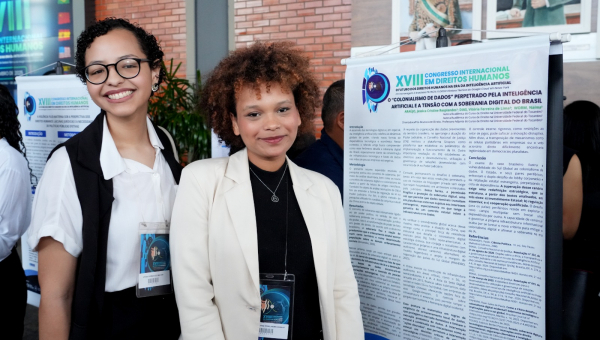
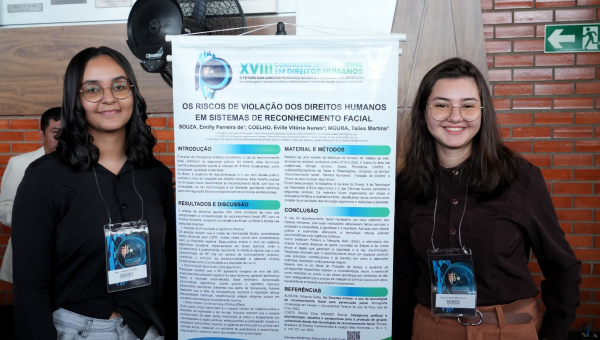
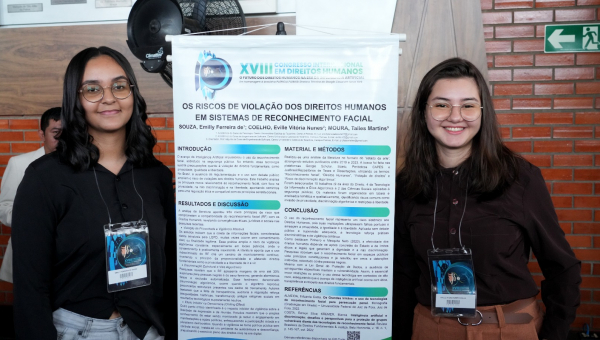
Students Evelyn Vitória (6th semester of Software Engineering) and Emily Ferreira de Souza (5th semester of Psychology) from Unicatólica presented the study: “The risks of human rights violations in facial recognition systems.”
The research analyzed fifteen articles, nine on Law, four on Technology, and two on Social Sciences, and concluded that facial recognition, although increasingly used, can lead to serious errors, especially against black people.
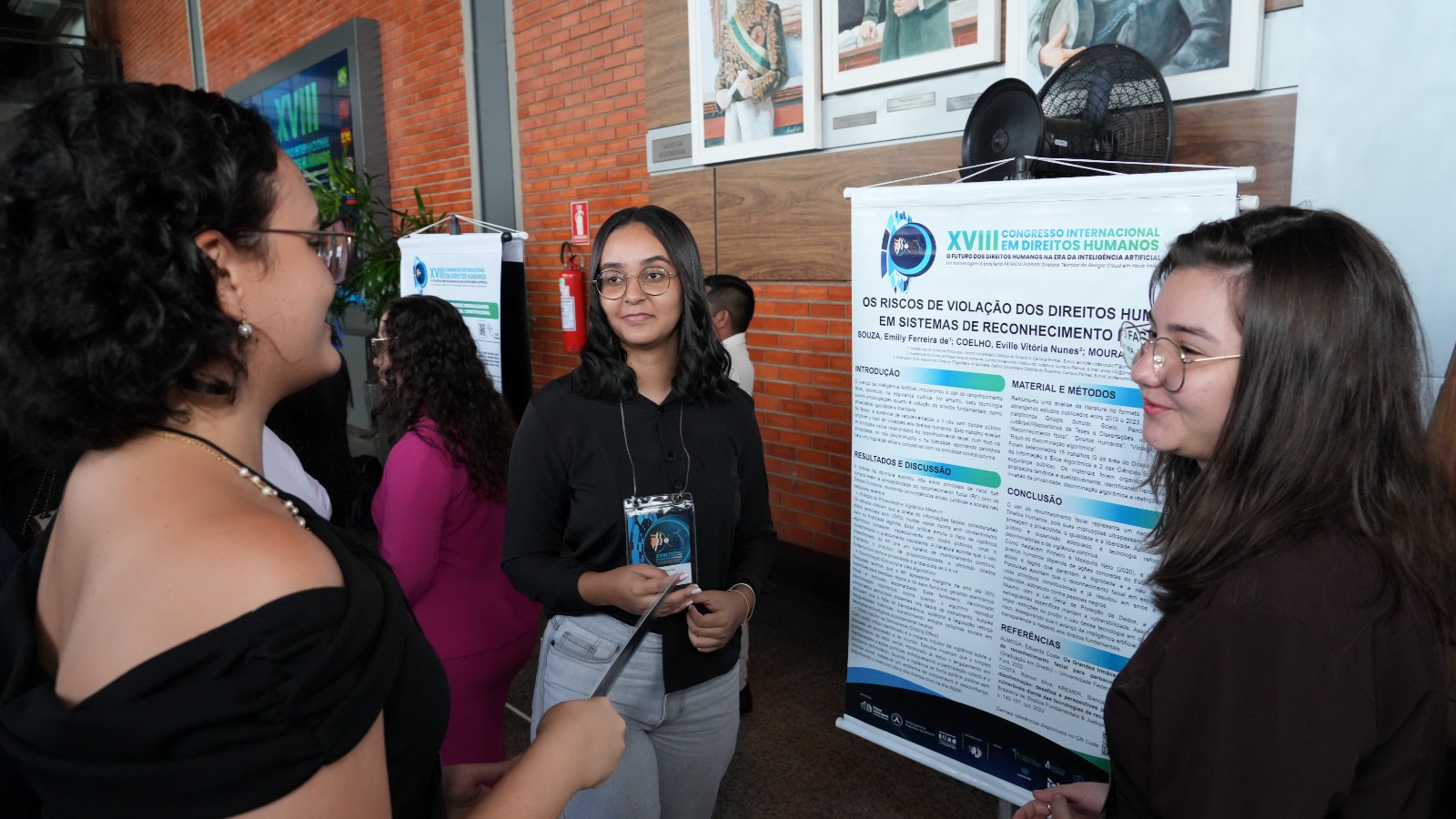
“They are wrongfully arrested because the system recognizes them as wrong. There is a lack of regulation and oversight. The technology exists, but it needs more ethical and transparent rules," they point out.
Crafts and resocialization of women
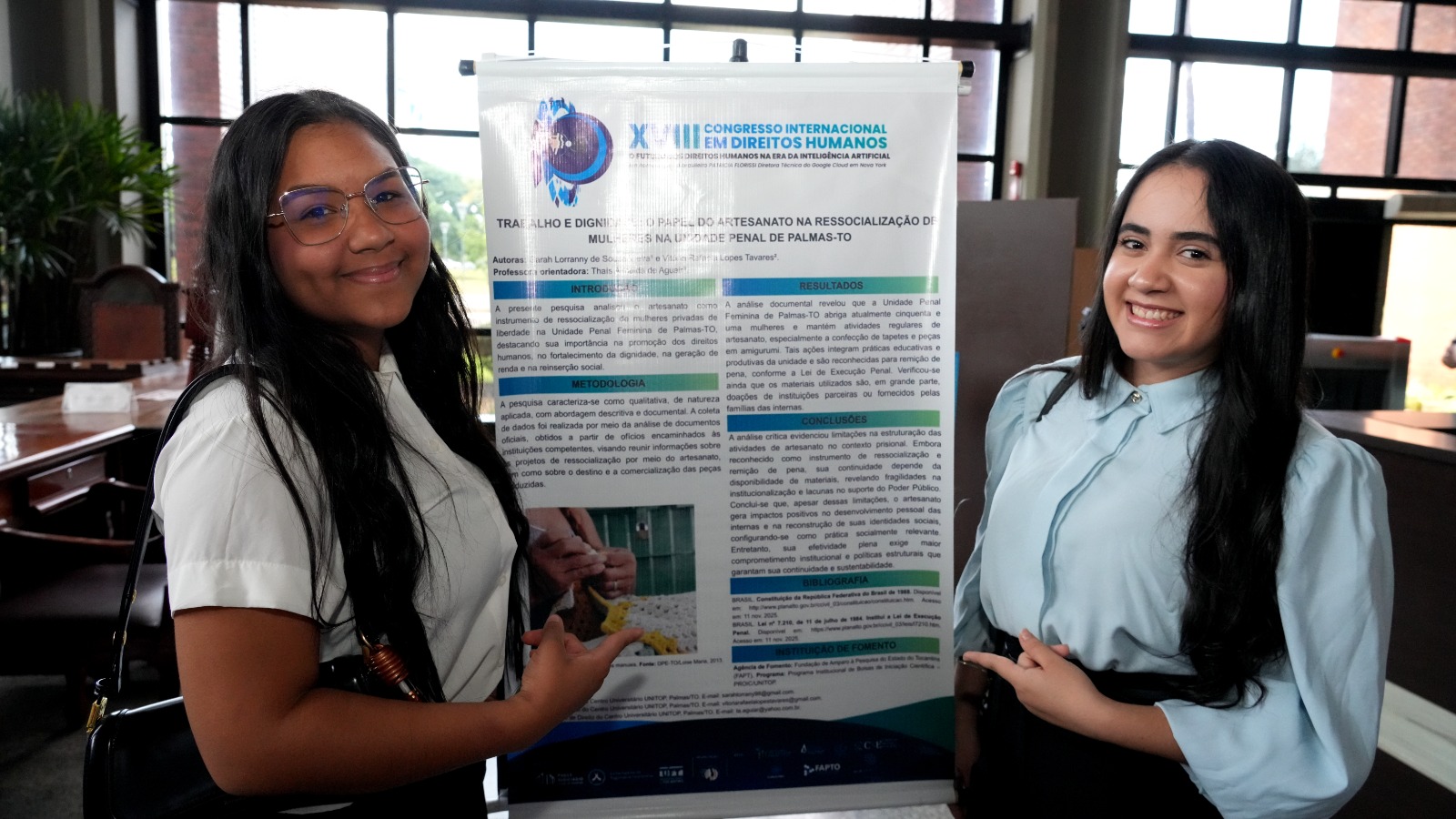
From the Unitop University Center, Law students Vitória Rafaela Lopes Tavares and Sarah Lohani presented their work: “The role of handicrafts as a tool for resocialization and remission of sentences for women in the Prison of Women of the district of Palmas.”
The research found that handicrafts are a common practice and result in sentence remission for 51 women in the unit, and the activity has a recognized socializing function, but it depends exclusively on donations from family members and institutions, which creates instability.
“It's challenging, but very inspiring to be here. It's our first presentation at such a large event, and seeing so much research happening at the same time is motivating," they said.
Evaluation, selection and awards
The works were previously evaluated based on criteria published in the call for papers (expanded abstract, materials and methods, results, discussion, conclusion, and references) and all of them have been supervised by faculty members.
The final selection will be announced this Friday (November 14th), when the authors ranked 1st, 2nd, and 3rd in each category will receive awards during the official programming of the Congress.