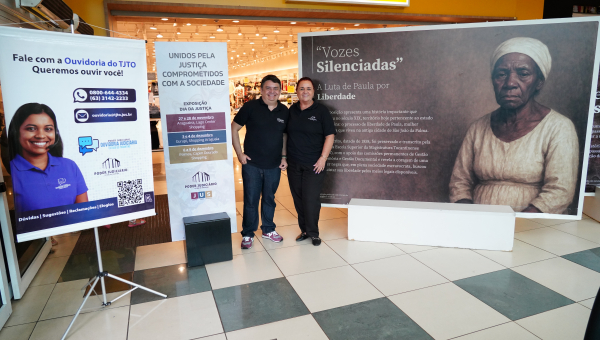
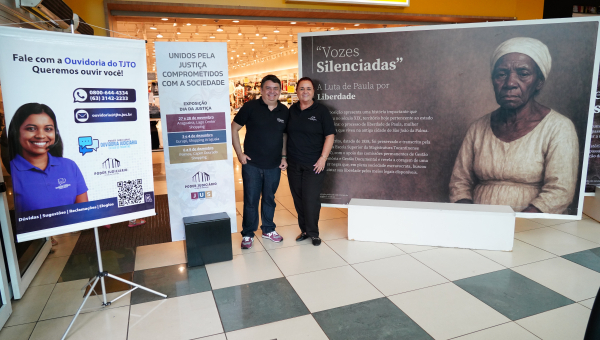
In the middle of the rushed movement of Capim Dourado Shopping Mall, in the city of Palmas, an island installed in one of the halls of the commercial center makes who passes slow down. Before the panels that tell the story of Paula, a black woman who, in 1858, judicially won her own freedom, visitors approach as if they find something curious.
The Itinerant Exhibition on "Silenced Voices – Struggle of Paula for freedom", promoted by the Court of Justice of the State of Tocantins (TJTO), through the Commission for Memory and Documentary Management of the TJTO, in partnership with the Superior School of the Judges of the State of Tocantins (Esmat), in celebration of the Day of Justice (Dec 8th), is open to visitation until this Monday.
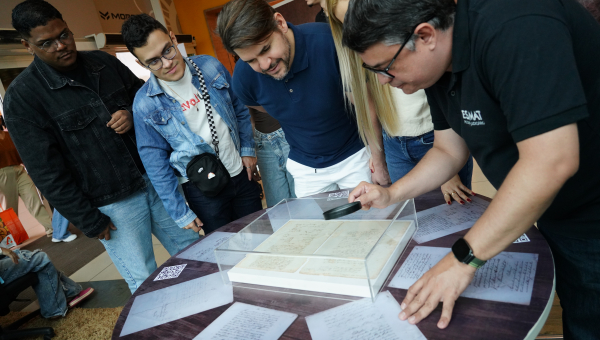
The Dentist Wallace Mota and the Nutritionist Cassiana Borges were attracted by a photograph, of those that seem to call by the look. "The story itself drew a lot of attention. We passed here and saw the photo. And these stories of slaves draw attention, especially today, right? We know that nowadays there is slavery in another way," said Wallace, who is from the Northeast but has lived in the state of Tocantins for more than ten years. He reminds how understanding the past also requires responsibility.
“The importance is that it serves as an example of what should not be done. This legacy has to be carried on forever. This makes us redeem the value of human beings. We cannot admit that this will happen again," he said.
Cassiana remained attentive to the images, silently absorbing the weight and delicacy of that story.
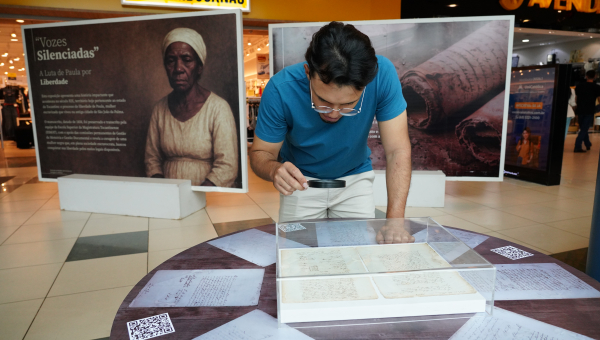
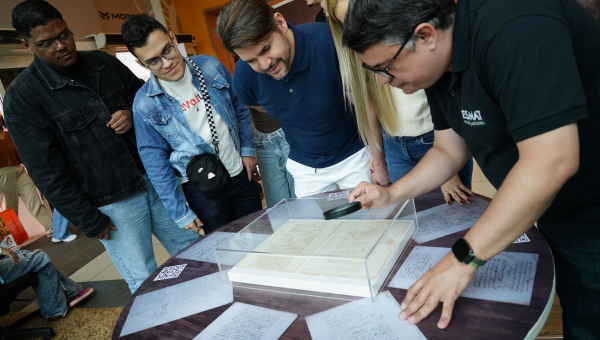
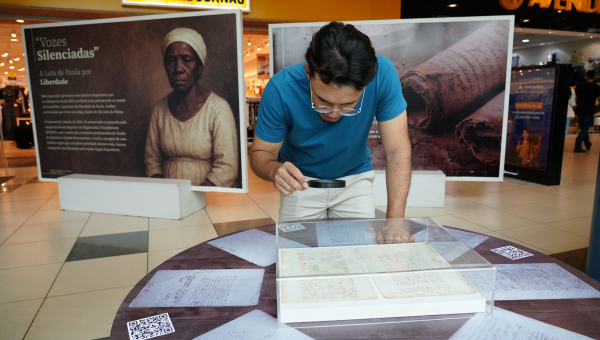
The Civil Engineer Lucas Alencar Silva also stopped in front of the window where it lies the original document of the nineteenth century. For him, the shock came mixed with belonging. "I like my origins. I am passionate about my State. We never stop to think that slavery happened in our State, but it did. And we have a document of this," said him who is from the city of Colinas. The manuscript text, already fragile by the time, awakened something that Lucas summarizes as direction.
“When we know our history, we know our future too. We know where we come from, we know where we are going. Seeing all this is extremely valuable," he said.
Among files, light and memory
Member of the Commission for Memory and Document Management, civil server Wherbert Araújo detailed the path that brought the case of Paula to public knowledge.
"The process is already three years old and the Commission has knowledge of the data. It was used a technique called paleographic reading made by a doctor professor of the UFT. He made the transcription of the document, and based on this we note that it was an enslaved person who entered with a petition in the Judiciary at the time citing the sale of its charter. The document says that he was a person of advanced age and with a visible illness, who bought his own freedom for 60,000 réis".
The exhibition began in the city of Palmas, May this year, and passed through the cities of Araguaína and Gurupi. Now it returns to the capital to bring this reunion with a little known history.
“People are impressed. Little is known of the history of the state of Tocantins in previous centuries. The most recurrent memory is the creation of the State. But the document shows the way of life of the people who lived here at that time, when it was still the province of Goiás", he commented.
Ombudsman
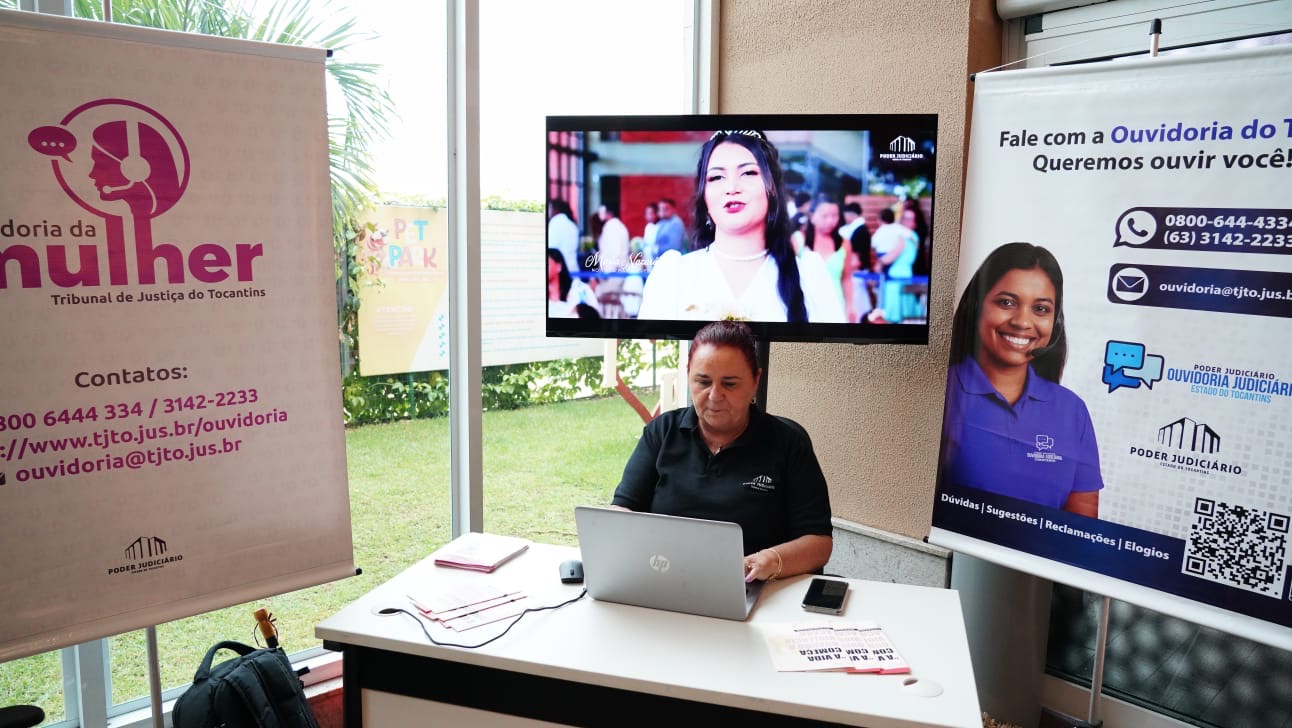
In addition to rescuing an essential chapter of history, the exhibition instigates reflections on citizenship, identity and rights. TJTO also participates in the exhibition through the Judicial Ombudsman, which provides direct service to the public and publicizes the services offered by the Judiciary. Until this Monday (Dec 8th), civil servers of the unit were on site to guide visitors and receive demonstrations.


_thumbnail_thumbnail.jpg)


_thumbnail.jpg)